Languages
Monday, October 5, 2026



News and Views from the Global South
Women's Health

‘Therapeutic Abortion’ Could Soon Be Legal in Chile
Chile, one of the most conservative countries in Latin America, is getting ready for an unprecedented debate on the legalisation of therapeutic abortion, which is expected to be approved this year.
Mission Midwife: The Case for Trained Birth Attendants in Senegal
Diouma Tine is a 50-year-old vegetable seller and a mother of six boys. In her native Senegal, she tells IPS, motherhood isn’t a choice. “If you’re married, then you must have children. If you don’t, then you don’t get to stay in your husband’s house, and no one will respect you.”
On Sri Lanka’s Tea Estates, Maternal Health Leaves a Lot to Be Desired
A mud path winds its up way uphill, offering views on either side of row after row of dense bushes and eventually giving way to a cluster of humble homes, surrounded by ragged, playful children.
Saving the Lives of Cameroonian Mothers and their Babies with an SMS
“You can’t measure the joy in my heart,” Marceline Duba, from Lagdo in Cameroon’s Far North Region, tells IPS as she holds her grandson in her arms.OPINION: Invest in Young People to Harness Africa’s Demographic Dividend
Different issues will be competing for the attention of different African leaders attending the 69th United Nations General Assembly Special Session on International Conference on Population and Development (ICPD) Beyond 2014 in New York on Sep 22.Georgia’s Female Drug Addicts Face Double Struggle
Irina was 21 when she first started using drugs. More than 30 years later, having lost her husband, her home and her business to drugs, she is still battling her addiction.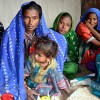
U.N. Urged to Reaffirm Reproductive Rights in Post-2015 Agenda
The U.N.'s post-2015 development agenda has been described as the most far-reaching and comprehensive development-related endeavour ever undertaken by the world body.
Geographical Divide in Maternal Health for Syrian Refugees
At the largest refugee camp in Iraqi Kurdistan, young Syrian mothers and pregnant women are considered relatively lucky.
Against All the Odds: Maternity and Mortality in Afghanistan
Nasrin Mohamadi, a mother of four, has promised herself never to set foot in an Afghan public hospital again. After her first experience in a maternity ward, she has lost all faith in the state’s healthcare system.
OPINION: Investing in Adolescent Girls for Africa’s Development
Adolescence is a time of transition from childhood to adulthood. It is also a time of change and challenge.
How Niger’s Traditional Leaders are Promoting Maternal Health
It is a long, 14-hour drive from Niger’s capital city Niamey to the village of Bande. And the ride is a dreary one as the roadside is bare. The occasional, lone goat herder is spotted every few kilometres and the sightings become a cause of both confusion and excitement since there aren’t any trees, or watering holes in sight.
No Easy Choices for Syrians with Small Children
The woman who walked into the Islamic Front (IF) media office near the Turkish border was on the verge of fainting under the hot Syrian sun, but all she cared about was her infant son.
OPINION: Iraq On the Precipice
The catastrophic events in Iraq that are unfolding daily are more significant than at any point in recent memory.
Afghan “Torn” Women Get Another Chance
"The smell of faeces and urine isolates them completely. Their husbands abandon them and they become stigmatised forever” – Dr Pashtoon Kohistani barely needs two lines to sum up the drama of those women affected by obstetric fistula.Arab Region Has World’s Fastest Growing HIV Epidemic
At a time when HIV rates have stabilised or declined elsewhere, the epidemic is still advancing in the Arab world, exacerbated by factors such as political unrest, conflict, poverty and lack of awareness due to social taboos.
Nepal Landslide Leaves Women and Children Vulnerable
Living in a makeshift tarpaulin shelter, which barely protects her family from the torrential rainfall or scorching heat of this remote village in southern Nepal, 36-year-old Kamala Pari is under immense stress, worrying about her financial security and children’s safety.
How Midwives on Sierra Leone’s Almost Untouched Turtle Islands are Improving Women’s Health
Emmanuel is a male midwife. At the age of 26, he lives and works on one of eight islands off the southwest peninsular of Sierra Leone, an hour by speedboat from Mattru Jong, the capital of Bonthe District.
Bangladeshi Girls Seek Equal Opportunity
Until five years ago, Shima Aktar, a student in Gajaghanta village in the Rangpur district of Bangladesh, about 370 km northwest of the capital Dhaka, was leading a normal life. But when her father decided that it was time for her to conform to purdah, a religious practice of female seclusion, things changed.
India: Home to One in Three Child Brides
Basanti Rani*, a 33-year-old farmers’ wife from the northern Indian state of Haryana, recently withdrew her 15-year-old daughter Paru from school in order to marry her off to a 40-year-old man.
Helping Uganda’s HIV positive Women Avoid Unplanned Pregnancies
Barbara Kemigisa used to call herself an “HIV/AIDS campaigner”. These days she would rather be known as an “HIV/AIDS family planning campaigner”.
East Africa Breaks the Silence on Menstruation to Keep Girls in School
When Peninah Mamayi got her period last January, she was scared, confused and embarrassed. But like thousands of other girls in the developing world who experience menarche having no idea what menstruation is, Mamayi, who lives with her sister-in-law in a village in Tororo, eastern Uganda, kept quiet.« Previous Page — Next Page »


Worldwide, women’s health is a serious issue. The result of a wide diversity of factors, most notably insufficient access to education, women’s health issues must be addressed. Without access to proper schooling, many girls grow up without the necessary understanding of reproductive health. Due to this, reproductive issues and sexually transmitted infections plague women in developing countries. Women struggle to battle infections such as HIV. The lack of relevant services, coupled with the lack of women’s rights pertaining to their own health, are some of the serious issues that these stories seek to explain.

The Week with IPS

NEXT STOP - SDGs
Tracking global progress towards a sustainable world
Tracking global progress towards a sustainable world
