Languages
Saturday, November 28, 2026



News and Views from the Global South
Regional Categories

Beyond Calais: A Perspective on Migration, Agriculture and Rural Development
Migration is part of the process of development. It is not a problem in itself, and could, in fact, offer a solution to a number of matters. Migrants can make a positive and profound contribution to the economic and social development of their countries of origin, transit and destination alike. To quote the New York Declaration, adopted at the UN Summit on Refugees and Migrants on 19 September, “migrants can help to respond to demographic trends, labour shortages and other challenges in host societies, and add fresh skills and dynamism to the latter’s economies”.
Canadian Indigenous Injustice: A Colonial Problem?
The history of Canada’s indigenous population has been, for the most part, kept in the shadows. According to leading expert on indigenous justice Lisa Monchalin, the consequences of colonialism and dispossession on native communities have been “glossed over”, unacknowledged and dismissed by the “settled” population.
Latin America to Take the Temperature of Paris Agreement at Climate Summit
With the ratification and entry into effect of the Paris Agreement still fresh, the countries of Latin America are heading to the climate summit in Marrakesh in search of clear rules that will enable them to decarbonise their economies to help mitigate global warming.
Four Things You Should Know about the Other Election This Week
Next week, millions of people around the world will be glued to their TV screens and social media feeds, watching as the USA decides who will lead the most powerful country on earth. Around 3,000 kilometers away, in a much smaller nation in the middle of Central America, another election will take place just a couple of days earlier. Although Nicaragua’s presidential election lacks the fame of the Clinton-Trump race, it is every bit as controversial.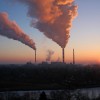
World to Cut Gas Emissions by 25 Percent More Than Paris Agreement
On the eve of the entry into force of the Paris Agreement today Nov. 4, the United Nations sounded new climate alarm, urging the world to ‘dramatically’ step up its efforts to cut greenhouse gas emissions by some 25 per cent more.
Nicaragua’s Elections Marked by Apathy and Mistrust
In the midst of unusual political tension and apathy, Nicaraguans will go to the polls on Sunday Nov. 6 to vote in elections marked by the absence of the main opposition force and international election observers.
Privatization Cure Often Worse Than Malady
Privatization of SOEs has been a cornerstone of the neo-liberal counterrevolution that swept the world from the 1980s following the economic crisis brought about by US Fed’s sharp hike in interest rates. Developing countries, seeking aid from the International Monetary Fund (IMF) and the World Bank, often had to commit to privatization as a condition for credit support.
Wonder Woman: Not the Hero the UN Needs
For those of us who ever feel conflicted about the United Nations, the past month has been an exercise in managing absurd cognitive dissonance. First, on October 21 2016, the United Nations announced that the 1940s comic book heroine, Wonder Woman would be its new mascot for promoting the empowerment of women and girls.
Festival Spotlights African Women Filmmakers
At the Bioscope Independent Cinema in Johannesburg’s trendy, gentrifying Maboneng neighbourhood last week, the two-day HER Africa Film Festival showcased films and web series from across the globe, including Mali, the U.S., Burkina Faso and elsewhere.
Journalist Murders: The Ultimate Form of Censorship
The UN Educational, Scientific and Cultural Organization (UNESCO) has condemned the killing of more than 800 journalists globally since 2006. A measly seven percent of these murders have been solved.
The Key Role Women Played in Culture of Peace
In the fifteen years since the adoption of UN Security Council Resolution 1325, we have seen a tremendous enthusiasm among civil society at all levels in raising awareness, engaging in advocacy and building capacity for its meaningful implementation. It is my pleasure to write the foreword to this publication which is a meaningful endeavour to move the agenda forward on the occasion of the 15th anniversary of the adoption of this groundbreaking resolution.
International Women’s Boat to Gaza
A few weeks ago, the US government agreed to give Israel $38 billion dollars, the largest military funding package the U.S. has given any nation. This $38 billion in military and other type of Aid will be used to imprison the Palestinians of Gaza, and continue Israel’s military occupation, and imposition of an apartheid state, upon the Palestinian people.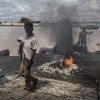
Toxic Air – The ‘Invisible Killer’ that Stifles 300 Million Children
About 300 million children in the world are living in areas with outdoor air so toxic – six or more times higher than international pollution guidelines – that it can cause serious health damage, including harming their brain development.
Rural Malawians About to Go Online
This month, many Malawians, especially those in rural areas, will be able to start accessing the internet as easily as opening a tap to get water.
Int’l Effort to Help Ethiopia Shoulder Its Refugee Burden
A concerned-looking group of refugees gather around a young woman grimacing and holding her stomach, squatting with her back against a tree. But this is no refugee camp, rather the Jesuit Refugee Service (JRS) compound just off a busy main road leading to Sidist Kilo roundabout in the Ethiopian capital.
Longer, But Less Meaningful Lives?
The last one hundred years life expectancy has increased by about 25 per cent-from near 80 to near 100-in some countries. But, instead of increasing playful childhood, education, work and retirement by 25 per cent, the age of retirement has moved much less than the age at death.
Q&A: Bangladesh’s ‘Higher Trajectory of Development’ Not Easy but Achievable
Bangladesh, a country of 160 million people, has made significant progress in its efforts to accelerate economic growth, reduce poverty and promote social development, but it now faces certain challenges in consolidating these achievements and marching forward on the higher trajectory of development, says one of its leading economists.
Reparations owed for “Racial Terrorism” says UN Committee
Stressing the enduring relationship between injuries inflicted by slavery and contemporary injustices, a UN committee has recently issued a strongly-worded call for reparations for black U.S. Americans.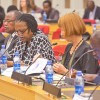
Africa and the Paris Agreement: Which Way Forward?
The Paris Agreement on climate change is set to enter into force on Nov. 4, after it passed the required threshold of at least 55 Parties, accounting for an estimated 55 per cent of the total global greenhouse gas emissions, ratifying the agreement.
Dying to Get to Europe
They are not just data or numbers for statistical calculations. They are desperate human beings fleeing wars, violence, abuse, slavery and death. They hear and believe the bombastic speeches about democracy and human rights and watch the many images of welfare and good life in Europe.
Gorbachev Appeals for Sanity, Dialogue
President Mikhail Gorbachev, former leader of the Soviet Union and recipient of the 1990 Nobel Peace Prize, has appealed to world leaders to reduce the dangerous tensions, which today threaten to plunge human civilization and the biosphere into an all-destroying nuclear war.« Previous Page — Next Page »


The Week with IPS

NEXT STOP - SDGs
Tracking global progress towards a sustainable world
