
Tuesday, November 17, 2026



News and Views from the Global South


Q&A: Mutant Fruit Trees to Grow in Saline Soils in Cuba
During some parts of the year, a layer of salt can be seen on the ground in eastern Cuba, which makes it difficult, and sometimes impossible, to farm. Since agronomist Orlando Coto saw this with his own eyes, he has been searching for salt-tolerant fruit trees.First Strike in Quarter Century Exposes Treatment of Migrant Labour in Singapore
The first workers strike in 26 years in this affluent Southeast Asian city-state has triggered some soul-searching about the treatment of migrant labour and the low wages they are paid.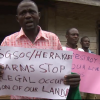
Q&A: Fighting to Save Africa’s Richest Rainforest
Protests against a controversial palm oil plantation in the Korup National Park, Africa’s oldest and richest rainforest in terms of floral and faunal diversity, in Mundemba, southwest Cameroon will continue despite the arrests and intimidation of local environmental campaigners.

Obama’s Victory a Boon for Clean Air, Water Acts
With Barack Obama’s re-election last month as U.S. president, key environmental protections escaped a likely Republican chopping block, and new regulations are expected when his second term begins in January.
Curbing Tanzania’s “Land Grabbing Race”
From January 2013, Tanzania will start restricting the size of land that single large-scale foreign and local investors can “lease” for agricultural use. The decision follows both local and international criticism that major investors are grabbing large chunks of land here, often displacing small-scale farmers and local communities.
BRICS Tracking Where the Money Flows
The five leading developing nations grouped in the BRICS alliance – Brazil, Russia, India, China and South Africa – are planning to intensify efforts to collect accurate trade data, so they can get a better picture of trade flows.
Detained at the Eastern Border – Part 2
Twenty-two years ago today, on Dec. 18, 1990, the United Nations General Assembly adopted the International Convention on the Protection of the Rights of All Migrant Workers and Members of Their Families.
Farmers Need to Grow Climate Smart
Farmers cannot wait much longer for negotiators to reach an agreement on including a work programme on agriculture in the United Nations Framework Convention on Climate Change. And until one is approved, “it will continue to be difficult for farmers to produce the food needed, and at the same time reduce greenhouse gas emissions."Financial Crimes Cost Developing World At Least a Trillion Dollars
The developing world lost nearly one trillion dollars in 2010 as a result of corruption, tax evasion, and other financial crimes not involving cash transactions, according to a new report released here Monday by Global Financial Integrity (GFI).
Rate of U.S., Russian Nuclear Disarmament “Slowing”
Although the United States and Russia have massively reduced their collective number of nuclear weapons since the heyday of the Cold War, the rate of that reduction is slowing, the Federation of American Scientists (FAS) warned Monday.
In Dominica, Diminished Rivers Among Climate Change’s Effects
Eighty-year-old Rupert Lawrence has been living in the Dominica capital, Roseau, for nearly 60 years. Like visitors to the island, he too is fascinated by the fact that the town square has a river running right through its centre.
Big Landowners Block Rural Development Law in Guatemala
An “integral rural development law” to promote access to land, employment and other rights for small farmers is bogged down in the Guatemalan Congress due to opposition from large landowners, who see it as an attempt at land reform.
Environmental Uncertainties Halt Deep Sea Mining
The world’s first deep sea mineral (DSM) mining venture in the Bismarck Sea off the northern coast of Papua New Guinea in the southwest Pacific has come to a halt after two years of development.
Frolic Barefoot, But Don’t Leave a Carbon Footprint
As the world’s most tourism-dependent region, with the sector accounting for one in every eight jobs, the Caribbean has much to fear from climate change.
At the Edge of the Carbon Cliff
The most important number in history is now the annual measure of carbon emissions. That number reveals humanity's steady billion-tonne by billion-tonne march to the edge of the carbon cliff, beyond which scientists warn lies a fateful fall to catastrophic climate change.
Deforestation Wreaks Havoc in Guatemala’s Caribbean Region
"Many tourists come to this area for bird watching, but the terrible deforestation is leading to the disappearance of so much of our flora and fauna. The cleared land is used for cattle ranching,” said Haroldo Figueroa, who works as a guide in nature reserves along Guatemala’s Caribbean coast.
Ceasefire Means ‘Nothing’ to Gaza Fishers
Shortly after Israel and Hamas signed a ceasefire agreement on Nov. 21, the Israeli navy abducted 30 Palestinian fishers from Gaza's waters, destroyed and sank a Palestinian fishing vessel, and confiscated nine fishing boats in the space of four days.
Urgent Action Is Needed to Restore Growth
The global economy weakened significantly towards the end of 2011 and further downward pressure emerged in the course of 2012. The growth rate of global output, which had already decelerated from 4.1 percent in 2010 to 2.7 percent in 2011, is expected to slow down even more in 2012 to around 2.3 per cent. Developed economies as a whole are likely to grow by only slightly more than one per cent in 2012, owing mainly to the recession currently gripping the European Union (EU).
South-South Political Alliances Yet to Influence Business
Politicians in the leading developing nations have been active in boosting mutual ties, as one way of counterbalancing the influence of the developed world. But the economic success of the Brazil, Russia, India, China, and South Africa and the India, Brazil, and South Africa groupings will depend on the extent to which businesses take advantage of the new opportunities which are being created.
Remittances Soothe the Scourge of Militancy
Fifty-nine-year-old Sherdil Shah, a resident of South Waziristan – a hotbed of militancy in northern Pakistan’s Federally Administered Tribal Areas (FATA) – used to run a modest grain shop that fetched enough money to keep his family of 10 well-fed and looked after.
Detained at the Eastern Border – Part 1
A recent hunger strike, involving over 70 migrants detained in heavily guarded centers across Poland, is forcing the country to face its new responsibilities as a migration hub within the European Union.« Previous Page — Next Page »


Due to significant overlap in the themes and stories of interest to subscribers of both our European and UN newsletters, we have decided to consolidate both under the flag of IPS' popular daily TerravivaUN newsletter. Existing subscribers to the TerravivaEurope newsletter will continue to receive a daily selection of stories through the IPS TerravivaUN list and readers interested in global policy and development news from the EU, the UN and beyond are encouraged to subscribe below.

The Week with IPS

Tracking global progress towards a sustainable world
