Languages
Sunday, November 29, 2026



News and Views from the Global South


First Independent Expert To Tackle LGBTI Discrimination: “Historic Victory”
Human rights groups have described the UN Human Rights Council's (HRC) decision on Thursday to appoint an independent expert to target the ongoing discrimination of lesbian, gay, bisexual, transgender and intersex (LGBTI) people all over the world as a "historic victory."
Breaking the silence on Gender Based Violence
The Ministry of Public Service, Youth and Gender Affairs in partnership with the United Nations Population Fund (UNFPA) is establishing and strengthening sexual and gender based violence (SGBV) recovery centres in the country. One such center was launched at the Kilifi County Hospital on 01 July 2016 in collaboration with the Kilifi County Government.
The Shift from Social Development to Infrastructure – How to Build Greener
Across the world, the pendulum has swung from a focus on social development to infrastructure development. Recognizing that infrastructure is only one variable in the development equation, we must try to get the most value from this shift in priorities.
Suspend Saudi Arabia from Human Rights Council, Human Rights Groups Say
Saudi Arabia’s membership in the Human Rights Council (HRC) should be suspended by members of the UN General Assembly, Human Rights Watch (HRW) and Amnesty International (AI) said on Wednesday.
North and South Face Off Over “Right to the City”
The declaration that will be presented for approval at the Third United Nations Conference on Housing and Sustainable Urban Development (Habitat III) in October has again sparked conflict between the opposing positions taken by the industrial North and the developing South.
Post-War Truth and Justice Still Elusive in Bougainville
Almost every family in the islands of Bougainville, an autonomous region of about 300,000 people in the Pacific Island state of Papua New Guinea, has a story to tell of death and suffering during the decade long civil war (1989-1998), known as ‘the Crisis.’
The Geography of Poverty
World leaders agreed in 2000 to halve the number of people living in poverty by 2015. The poverty line was defined as the purchasing power parity (PPP) equivalent to a US dollar a day, later adjusted to the 2005 PPP equivalent of $1.25 daily in 2008 to the 2012 PPP equivalent of $1.90 daily in 2015. As the cost of living rise unevenly across the world, the World Bank periodically updates the global poverty line to reflect these changes. Nevertheless, there are many concerns about how the line was defined and has been revised over the decades.
Uganda Rolls Out Compulsory Immunization to Dispel Anti-Vaccine Myths
Patience*, a Ugandan maid, planned on taking her three-year-old son for polio immunization during the country’s mass campaigns a year ago, until her landlord’s wife told her a shocking myth.
Let There Be Work: Italian Ministry of the Interior Announces Initiative on Employment of Refugees
Thus far, 2016 has proved fatal for the thousands of migrants crossing the Mediterranean in a bid to find safety in Italy. Alarmingly, between January and March, a spiralling death toll was recorded among refugees and migrants attempting to reach Italy by boat from North Africa.
Preventable Child Deaths Not Always Linked to Poorest Countries: UNICEF
Millions of children still die before reaching their fifth birthday every year, according to the 2016 State of The World’s Children Report released here Tuesday by the UN Children's Fund (UNICEF).
Ethiopia, Kazakhstan, Sweden Among New Members of UN Security Council
Bolivia, Ethiopia, Kazakhstan and Sweden were elected on Tuesday to serve on the UN Security Council (UNSC) as non-permanent members, while Italy and Netherlands have split the remaining contested seat.
The Case for Cash in Humanitarian Emergencies
Currently only six percent of humanitarian aid worldwide comes in the form of cash handouts, yet many aid organisations believe that cash transfers should be seen as the rule, not the exception.
Biogas Brings Heat and Light to Pakistan’s Rural Poor
Nabela Zainab no longer chokes and coughs when she cooks a meal, thanks to the new biogas-fueled two-burner stove in her kitchen.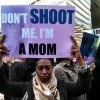
Why I Started SMART ALEC – Lobbying for the Public Good
For many years, as a reporter, including for IPS, I wrote about the dominance of a giant, corporate-funded lobbying organization called ALEC (the American Legislative Exchange Council), on public policy in the United States.
Drought Prompts Debate on Cuba’s Irrigation Problems
Five gargantuan modern irrigation machines water the state farm of La Yuraguana covering 138 hectares in the northeastern province of Holguín, the third largest province in Cuba. However, “sometimes they cannot even be switched on, due to the low water level,” said farm manager Edilberto Pupo.
Civil Society Under Serious Attack
Despite their contribution to social justice, civil society organisations came under “serious attack” in 109 countries in 2015, according to a new report published by CIVICUS Monday.
Journalists Face Unprecedented Violence
There has never been a time more dangerous to be a journalist than today. On an average week, one journalist gets killed, according to UNESCO, and the pace of these attacks keeps increasing.
Will Brexit Have Political Ramifications at UN?
The much-ballyhooed British exit (Brexit) from the 28-member European Union (EU) is likely to have political ramifications at the United Nations – both in the short and the long term.
Women’s Cooperatives Ease Burden of HIV in Kenya
Seventy-three-year-old Dorcus Auma effortlessly weaves sisal fronds into a beautiful basket as she walks the tiny path that snakes up a hill. She wound up her farm work early because today, Thursday, she is required to attend her women's group gathering at the secretary’s homestead.
The Brexit Shock – Now All Is Up in the Air!
The UK, Europe and the rest of the world will be affected. But there has been no planning for this anywhere. It’s now all up in the air what this Brexit vote will be the starting point of. All we can safely predict is that we are in for interesting times!
Brex’it, So Be’it; And Then What?
The vote turned out like the two referenda held in Norway in 1972 and 1994. And much for the same reason: Protestant break with Rome–Catholic, imperial–Henry VIII made himself head of the Anglican Church in 1534.« Previous Page — Next Page »


Want to keep up with the latest news and views from the Global South? Sign up for IPS Daily News Report for daily emails with our top stories about international development, climate change, gender and more. (Formerly IPS TerraViva since 1993).

The Week with IPS

NEXT STOP - SDGs
Tracking global progress towards a sustainable world
