Languages
Thursday, October 22, 2026



News and Views from the Global South
Latin America & the Caribbean

Boosting Food Security and Education in Schools in Brazil
"I like lettuce, but not tomatoes and cucumbers," said nine-year-old Paulo Henrique da Silva de Jesus, a third grader at the João Baptista Caffaro Municipal School in the southeastern Brazilian city of Itaboraí.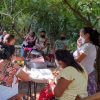
Indigenous Women in Mexico Take United Stance Against Inequality
Every other Tuesday at 5:00 p.m. sharp, a group of 26 Mexican women meet for an hour to discuss the progress of their work and immediate tasks. Anyone who arrives late must pay a fine of about 25 cents on the dollar.
Poor Water Distribution Infrastructure Gives Jamaica a ‘Water Scarce’ Label
It will take billions of dollars and many years to fix a growing problem that has placed Jamaica into the unlikely bracket of being among the world's most water-scarce countries due to the unavailability of potable water.
Women Politicians in Peru Face Severe Harassment, Discrimination
Women entering the political arena in Peru face multiple obstacles due to gender discrimination that hinders their equal participation, which can even reach the extreme of political harassment and bullying, in an attempt to force them out of the public sphere.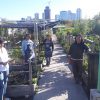
Women in Argentina Cultivate Dignity in Cooperative Vegetable Garden
The space consists of just 300 square meters full of green where there is an agro-ecological vegetable garden and nursery, which are the work and dream of 14 women. Behind it can be seen the imposing silhouettes of the high rises that are a symbol of the most modern and sought-after part of Argentina's capital city.
Black Women, the Most Oppressed and Exploited in Brazil
The Theater of the Oppressed helped her become aware of the triple discrimination suffered by black women in Brazil and the means to confront it, such as the Rio de Janeiro Domestic Workers Union, which she has chaired since 2018.
Commonwealth Climate Finance Hub to Boost Belize’s Delivery of Climate Change Projects
In September 2020, at the height of the COVID-19 pandemic, the UK-based Commonwealth Secretariat announced that it had dispatched highly skilled climate finance advisors to four member nations to help them navigate the often-complicated process of accessing climate funds. Belize, the Caribbean Community’s (CARICOM) only Central American member, was one of the recipients.
Mexico Embraces Gas, Scorns Renewable Energy
At home, Isabel Bracamontes uses gas only for cooking. "We try to prepare food that doesn't need cooking, like salads," she says in the southeastern Mexican city of Mérida.
Oil Crisis Offers Opportunities to the South and for the Green Energy Transition
The oil and gas supply crisis unleashed by the Russian invasion of Ukraine represents new business opportunities for the oil-producing countries of the developing South, both traditional and emerging, and also for accelerating the global transition to green forms of energy.
School Meal Programs Getting Back on Track in Central America, Despite Hurdles
A group of preschool students enthusiastically planted cucumbers and other vegetables in their small school garden in southern El Salvador, a sign that school feeding programs are being revived as the world emerges from the COVID-19 pandemic.
The Mayan Train and the Fight for Mexico’s Ancient Jungle
Along the wide slash of white earth in southwestern Mexico there are no longer trees or animals. In their place, orange signs with white stripes warn visitors: "Heavy machinery in motion," "No unauthorized personnel allowed".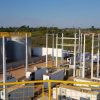
Palm Oil for Biodiesel in the Amazon: Sustainable Fuel or Deforestation Risk?
Oil palm, known as dendezeiro in Brazil, can produce up to ten times more vegetable oil per hectare than other crops, but it is regularly condemned as harmful to the biodiversity of tropical forests in Asia, Africa and Latin America. Now, its cultivation looks set to advance in the Brazilian Amazon.
Turning Agro-industrial Waste into Energy in Argentina
Three giant concrete cylinders with inflated membrane roofs are a strange sight in the industrial park of Zárate, a world of factories 90 kilometers from Buenos Aires that heavy trucks drive in and out of all day long. They are the heart of a plant that is about to start producing energy from agro-industrial waste, for the first time in Argentina.
New Seed Bank to Support Agriculture of the Future
As he points to a white shelf that holds bean seeds, Austrian biologist Peter Wenzl explains that one of them, obtained in Ecuador, provided a gene for the discovery that major seed protein arcelin offers resistance to the bean weevil.
Desalination Plants, Solution and Environmental Challenge for Chile
The Pacific Ocean could quench the thirst caused by 10 years of drought in Chile, but the operation of desalination plants of various sizes has a long way to go to become sustainable and to serve society as a whole rather than just corporations.
Informal Workers Face Up to the Crisis in Latin America
Doris Martínez was a cook in a Venezuelan restaurant that closed its doors; she emigrated to Colombia, got sick from working long hours standing in front of a stove, and returned to her country where, together with her husband and children, she runs a busy fast food kiosk on a road in Valles del Tuy, near the Venezuelan capital.
Ethanol Not Enough to Heal Sugarcane’s Environmental Legacy in Colombia
As a visitor drives across the plains of the department of Valle del Cauca in southwestern Colombia, green carpets dominate the view: sugarcane fields that have been here since the area got its name.
New Constitution Would Declare Chile a Plurinational State
Chile could change the course of its history and become a diverse and multicolored country this year with a “plurinational and intercultural state” that recognizes and promotes the development of the native peoples that inhabited this territory before the Spanish conquest.
Changing a System that Exploits Nature and Women, for a Sustainable Future
"Pachamama (Mother Earth) is upset with all the damage we are doing to her," says Hilda Roca, an indigenous Peruvian farmer from Cusipata, in the Andes highlands of the department of Cuzco, referring to climate change and the havoc it is wreaking on her life and her environment.
Women Bear the Brunt of Post-COVID Employment Woes in Latin America
The COVID-19 pandemic did not hit everyone equally and employment has shown a clear gender-differentiated impact. Two years after the start of the pandemic, it is more difficult for women than men to recover their jobs, and this is clearly reflected in Latin America.
Young Argentine Women Forge a Future in Cooperative Factory
"We started making shampoos and soaps in the kitchen of a friend’s house in 2017. We were five or six girls without jobs, looking for a collective solution, and today we are here," says Letsy Villca, standing between the white walls of the spacious laboratory of Maleza Cosmética Natural, a cooperative that brings together 44 women in their early twenties in the Argentine capital.« Previous Page — Next Page »





The Week with IPS

NEXT STOP - SDGs
Tracking global progress towards a sustainable world
Tracking global progress towards a sustainable world

