Languages
Wednesday, October 21, 2026



News and Views from the Global South
World Bank

Brazil Develops “Superfoods” to Fight Hidden Hunger
In less than 10 years, consumers throughout Brazil will have access to eight biofortified “superfoods” being developed by the country’s scientists. A pilot initiative is currently underway in 15 municipalities.
EU Bank ‘Funding Polluters’
The European Investment Bank, the largest institutional bank in the world, is facing criticism for its funding of fossil fuel projects and for weaker standards for lending to coal plants than currently proposed in both the U.S. and Canada.
World Bank Doctor Promises Not to Make Prescriptions
Long before he became president of the World Bank, South Korean physician Jim Yong Kim was on the dusty streets of the working-class Lima neighbourhood of Carabayllo, helping cure local residents of tuberculosis.
Green Economy Not Taking Off in Latin America
A year after endorsing the principles of the green economy at the Río +20 summit, Latin America is making little progress towards sustainable development models, according to experts.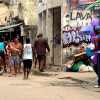
A Latin America With Opportunity for All
Latin America has had a good decade. Over the last 10 years, economic growth averaged 4.2 percent, and 70 million people escaped poverty. Macroeconomic stability, open trade policies and pro-business investment climates have supported and will continue to support strong growth in the years to come.
World Bank to “Cease Providing” Funding for New Coal Projects
The World Bank is set to consider dramatically cutting down its funding for coal-related power projects, according to a draft strategy document leaked this week.World Bank Formally Urged to Overhaul ‘Doing Business’ Report
An external review panel is calling on the World Bank to institute sweeping reforms to its widely cited annual “Doing Business” report, including doing away with a controversial ranking of countries on a variety of business-friendliness metrics.
Mining Benefits Fail to ‘Trickle Down’
With South-South trade on the rise and growth in emerging economies set to outstrip production in industrialised countries, the international mining sector has been quick to follow global trends.Climate Change Promises Tough Times for Asia and Africa – Report
Extreme heat, flooding and water and food shortages will rock South Asia and Africa by 2030 and render large sections of cities inhabitable, if the world continues to burn huge amounts of coal, oil and gas, the World Bank is warning.
Climate Change to Determine Economic Growth
The Monetary Board of Sri Lanka’s Central Bank, tasked with keeping the island’s economy on an even keel, does not only keep tabs on exchange rates, gold prices and inflation – it also has an eye on a less obvious indicator of economic stability: water levels in the country’s main reservoirs.
Small Ponds Bring Bumper Harvests
“I would never have believed it possible to get a bumper rice harvest during the drought season,” 43-year-old Mohammad Shajahan Ali, a farmer hailing from the village of Magtapur in Bangladesh’s northern Chapainawabganj district, told IPS.
Examining the Depths of Ethiopia’s Corruption
Ethiopia may be one of the fastest-growing, non-oil producing economies in Africa in recent years, but corruption in this Horn of Africa nation is a deterrent to foreign investors looking for stable long-term partnerships in developing countries.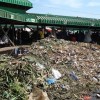
Is the 2030 Goal for Hunger Eradication Realistic?
With less than three years before a 2015 deadline, the developing world is largely expected to miss one of the U.N.'s key Millennium Development Goals (MDGs): halving the number of people living in extreme poverty and hunger.How to Close Latin America’s Rich-Poor Chasm
Latin American governments have increasingly been working to lessen inequality in the region, but new data suggests their efforts vary widely in quality and impact.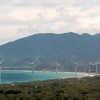
Ramping Up Renewable Energy in the Philippines
As the Philippines grapples with frequent power outages and a growing demand for energy, government agencies and private groups say the answer to the country’s power needs may lie in alternative sources.
Indian Gov’t on Collision Course With Civil Society
For years India’s pro-liberalisation, Congress party-led coalition government chafed at civil society groups getting in the way of grand plans to boost growth through the setting up of mega nuclear power parks, opening up the vast mineral-rich tribal lands to foreign investment and selling off public assets.
Afghan Women Harassed into Unemployment
While global attention is fixed on the scheduled pullout of U.S. and NATO troops from Afghanistan in 2014, women here have a much more immediate concern: how will they survive another day at work?
Developing World to Dominate Global Investment by 2030
Over the next decade and a half, a major global shift will result in the developing world controlling roughly half of the world’s capital, up from less than a third today.
South Asia in Search of Coordinated Climate Policy
With a combined population of over 1.7 billion, which includes some of the world’s poorest but also a sizeable middle class with a growing spending capacity, South Asia is a policymaker’s nightmare.Fragile States Show Signs of Progress Toward MDGs
Twenty of the world’s most fragile states, including those currently affected by conflict, have achieved one or more of the development targets outlined under the Millennium Development Goals (MDGs), the World Bank said this week.
Cell Phones Yes, Toilets No, World Body Laments
Speaking of the widespread sanitation crisis, U.N. Deputy Secretary-General Jan Eliasson was quick to produce staggering numbers: of the world's seven billion people, about six billion have mobile phones but only about 4.5 billion have access to toilets.« Previous Page — Next Page »





The Week with IPS

NEXT STOP - SDGs
Tracking global progress towards a sustainable world
Tracking global progress towards a sustainable world
