Languages
Monday, November 23, 2026



News and Views from the Global South
Civil Society
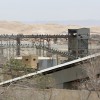
Water for Phosphate, Not People
Gafsa region in the south of Tunisia was once an oasis; today the phosphate industry has plunged it into a water crisis.

Q&A: “Women’s Participation in Peace Processes Is Still Very Small”
Friday is not just any day – it's the International Day of Peace. Concerts, debates and moments of silence will be held all over the planet to commemorate the ideal of global truce and tolerance.
Second Chance For an African Green Revolution
As the world searches desperately for ways to boost food production by at least 70 percent by 2050 to feed an increasingly hungry planet, many are looking to Africa as the place where a large part of this potential can be realised, mainly for its huge portion of arable land.
Involuntary Sterilisation Threatens Rights of Disabled Women
In 1996, Maria Mamerita Mestanza Chavez, a 33-year-old Peruvian mother of seven, was threatened with imprisonment if she did not comply with the government policy of undergoing sterilisation. After suffering post-operative complications for which she was refused treatment, Chavez died nine days later.
Human Rights Education Shows Its Potential
The impact of human rights education, a rising star, is highlighted in a short documentary sponsored by United Nations experts and civil society.OP-ED: Arab Democracies and the West
Anti-Western protests across the Arab Islamic world denouncing the anti-Islam video, reportedly produced in the United States, is a serious test for the new democratic governments in Egypt, Tunisia, Libya, Yemen, and elsewhere.Women Redefine Japan’s Work Culture
Unhappy with her employer of five years, Chikako Harada, 34, quit three months ago and has just started on a new job with a large Internet sales company.
Q&A: A New Era of Citizen Action Is Dawning
The Global Civil Society Network CIVICUS: World Alliance for Citizen Participation has a new secretary general - Dhananjayan (Danny) Sriskandarajah, who was appointed Monday by the board of directors following the CIVICUS World Assembly in Montreal.
Religious Groups in Brazil Condemn Attacks on Islam
The Brazilian Commission for Combating Religious Intolerance (CCIR) condemned the film “Innocence of Muslims" as “disrespectful” of the prophet Mohammed, and organised a mass protest demanding respect for freedom of religion in this country.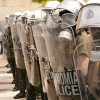
Xenophobes Find Police Protection in Greece
Panahi Gholamhousein (22), an Afghan refugee who spends his days in a room that is barely five square metres with his wife Zarmina (18) and their 19-month-old daughter Zahra, has hardly left his place in downtown Athens since he was beaten up and robbed nearly a month ago.
Post-Arab Spring Democratic Gains at Risk, Group Warns
Almost two years after popular uprisings swept across the Middle East and North Africa, rights advocates are warning that ominous backsliding is taking place in countries across the region and beyond.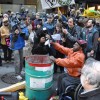
Occupy Celebrates Birthday, Forges Ahead
Led by a spirited brass band and waving placards decrying corporate greed, hundreds of occupiers took to San Francisco streets Monday to celebrate Occupy Wall Street’s first birthday, culminating in a ceremony where they symbolically ripped apart loan documents.
Q&A: “Pacification of Favelas Not a Real Public Policy Yet”
The “pacification” of the favelas in this Brazilian city, aimed at driving out armed groups and fighting drug trafficking, has not yet become a fully effective public policy, says Eliana Sousa Silva, who has lived in one of Rio’s shantytowns for nearly 30 years.Suu Kyi Backs Lifting of Final U.S. Sanctions on Myanmar
Speaking on Tuesday at her first public address in the United States, Myanmar’s opposition leader, Aung San Suu Kyi, said that she supported the lifting of the last remaining U.S. economic sanctions on her country, but also warned that all remaining political prisoners need to be released.
Occupy Marks Anniversary Amid Grim Economic Climate
Amid a heavy police presence, thousands of anti-capitalist activists in marked the one-year anniversary of the Occupy Wall Street movement against the U.S. political and economic system, which they say favours billionaires at the expense of the middle and working class.
New Plans to Protect Nature
At the close of the ten-day World Conservation Congress that ran from Sept. 6-15 on the South Korean island of Jeju, members of the convening International Union for Conservation of Nature (IUCN) agreed on an ambitious four-year action plan for protecting global natural resources.
India Coaxes Tribal Girls Into Schools
The deafening din of the lunch gong is sweet music to the 200-odd tribal girls rushing down the stairway, clutching stainless steel plates and tumblers.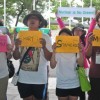
Companies Calculate Their Debt to Planet Earth
As ravenous consumers of natural resources, companies are beginning to recognise that they owe a monetary debt to the planet, and are sharpening their pencils to calculate it.
Amid Tension in Islamic World, U.N. Chief Pleads for Harmony
Amidst growing political tensions in the Islamic world over a video caricature of the Prophet Muhammad originating in the United States, U.N. Secretary-General Ban Ki-moon is making an “urgent “plea for political harmony worldwide.
Mob Violence Continues Against Myanmar’s Rohingya
Myanmar, also known as Burma, has taken important steps towards democracy and greater respect for human rights during the last months with one exception, activists say – the situation for the Rohingya minority, which has faced an outburst of violent attacks this summer.
No Safe Exit for Military Leaders
When Egypt's army was deployed to restore order in the streets during the uprising that ended president Hosni Mubarak's rule, Egyptians greeted the troops as saviours. But by the time the generals handed the country over to a civilian president in June this year, many Egyptians regarded the 16 months of transitional military rule as more oppressive than the 29 years under Mubarak.« Previous Page — Next Page »


 Representatives of Civil Society, Sierra Leone. Credit: UN Photo/Eskinder Debebe
Civil society faces mounting threats worldwide, even as it remains essential for democratic accountability, especially in countries struggling with economic instability and social inequality. However, at the same time, nations with weak democratic governance structures also systemically suppress the power of civil society. Human rights activists across the Global South frequently challenge issues such as political persecution and gender oppression, but in return face state-sanctioned punishment for their advocacy. Imprisonment and exile are common mechanisms of punishment that seek to erode the strength of civil society. The 2026 World Press Freedom Index has reached its lowest level in 25 years, with more than half of the world’s countries now falling into the "difficult" or “very serious” category for press freedom. IPS seeks to highlight the work of civil society across the Global South as well as the challenges that they face.
Updated by Yilan Batista and Shuli Wong August 2026

The Week with IPS

NEXT STOP - SDGs
Tracking global progress towards a sustainable world
