Languages
Sunday, October 18, 2026



News and Views from the Global South
Aid

Island States to Rally Donors at Samoa Meet
Amid accelerating climate change and other challenges, a major international conference in the South Pacific island nation of Samoa next month represents a key chance for Small Island Developing States (SIDS) in the Caribbean to turn the tide.
Helping Uganda’s HIV positive Women Avoid Unplanned Pregnancies
Barbara Kemigisa used to call herself an “HIV/AIDS campaigner”. These days she would rather be known as an “HIV/AIDS family planning campaigner”.
U.S. Urged to Put Development Aid over Border Security
When U.S lawmakers departed Washington for a month-long recess, they left behind a simmering debate over what to do about the tens of thousands of Central American children and adults that continue to cross the U.S. southern border.
South Sudan Heads towards Famine Amid ‘Descent into Lawlessness’
Another deadline has passed. But instead of bringing about peace, the leaders of South Sudan’s warring parties have allowed the country to continue its slide toward famine.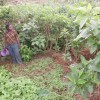
Adaptation Gaps Mean African Farmers Fork Out More Money for Reduced Harvests
In Cameroon's Northwest Region, Judith Muma walks 9km from her home to her 300-square-metre farm. The vegetables she grows here are flourishing thanks to the money she has borrowed from her njangi (thrift group) and a local credit union to finance a small artisanal irrigation scheme.
Gender Equality Gains Traction with Pacific Island Leaders
A pledge by political leaders two years ago to accelerate efforts toward closing the gender gap in the Pacific Islands has been boosted with the announcement that three women will take the helm of the regional intergovernmental organisation, the Pacific Islands Forum Secretariat, headquartered in Suva, Fiji.
Putting the Littlest Disaster Victims on the Caribbean’s Climate Agenda
Children are often the forgotten ones when policy-makers map out strategies to deal with climate change, even as they are least capable of fending for themselves in times of trouble.
What Do the World Bank and IMF Have to Do With the Ukraine Conflict?
Mostly unreported as the Ukraine conflict captures headlines, international financing has played a significant role in the current conflict in Ukraine.
Swamped by Rising Seas, Small Islands Seek a Lifeline
The world's 52 small island developing states (SIDS), some in danger of being wiped off the face of the earth because of sea-level rise triggered by climate change, will be the focus of an international conference in the South Pacific island nation of Samoa next month.
Kenya’s Own ‘Erin Brokovich’ Changes Lives of Girl Survivors of Sexual Abuse
Surrounded by endless rows of green tea plants, Mary carefully picked a leaf and placed it into a basket next to her. It seemed like an ordinary day at work for the 13-year-old girl from Meru, in central Kenya. After work she escaped to the adjacent farm for privacy, but was instead attacked and raped by a middle aged man.
Nepal’s Poor Live in the Shadow of Natural Disasters
Barely 100 km north of Nepal’s capital, Kathmandu, the settlement of Jure, which forms part of the village of Mankha, has become a tragic example of how the country’s poorest rural communities are the first and worst victims of natural disasters.
Will Obama’s “New Africa” Deliver on Its Promises?
As the three-day U.S- Africa Leaders Summit here drew to a close Wednesday, experts across the private, public and non-profit sectors continued to debate the opportunities and obstacles posed by the U.S’ expanding business partnership with Africa.
Asia Looks to Innovation to Achieve Sustainability
Innovation in the fields of renewable energy, food production, water conservation, education and health will be crucial for the developing economies of Asia to meet the United Nations’ Sustainable Development Goals (SDGs).
Hezbollah Tacitly Accepted for the Sake of Lebanese Stability
Concerns about supporting a national army collaborating with a ‘terrorist organisation’ in Lebanon have in recent times been superseded by threats inherent in growing regional conflict.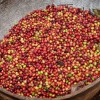
Cameroon Wants the World to Wake Up to the Smell of its Coffee
Issah Mounde Nsangou combs his 6.5-hectare Kouoptomo coffee plantation in Cameroon’s West Region, pulling up unwanted weeds and clipping off parasitic plants. For the 50-year-old farmer, the health of his coffee plants are of prime importance.
U.S. Summit Seeks to Play Catch-Up in Africa
Despite worsening crises in Ukraine, Gaza, and elsewhere in the Middle East, the administration of President Barack Obama hopes next week to focus at least some more positive attention on Africa.
In Pakistan, Militants Wear Aid Workers’ Clothing
Muhammad Tufail, a 22-year-old resident of Mardan, one of 26 districts that comprise Pakistan’s northern Khyber Pakhtunkhwa (KP) province, has recently become a volunteer aid worker.
How Farming is Making Côte d’Ivoire’s Prisoners ‘Feel Like Being Human Again’
François Kouamé, prisoner Number 67, proudly shows off a sow and her four piglets. Dressed in his rubber boots, he passes by two new tractors as he happily makes his way to a field where pretty soon cassava and corn plants will start growing. “Look at those sprouts. It is a lot of work!”
Politics Complicates Education in Lebanon’s Refugee Camps
The Shatila Palestinian camp has no library, nor does adjacent Sabra or Ain El-Hilweh in the south. And, after recent statements by Lebanon’s foreign minister, some fear that the thousands of Syrian refugee children within them will soon have even slimmer chances of learning to read and write.
Cash Transfers Drive Human Development in Brazil
Every day, Celina Maria de Souza rises before dawn, and after taking four of her children to the nearby school she climbs down the 180 steps that separate her home on a steep hill from the flat part of this Brazilian city, to go to her job as a domestic. In the evening she makes the long trek back up.
Is Europe’s Breadbasket Up for Grabs?
Amidst an exodus of some 100,000 people from the conflict-torn eastern Ukraine, ongoing fighting in the urban strongholds of Donetsk and Luhansk between Ukrainian soldiers and separatist rebels, and talk of more sanctions against Russia, it is hard to focus on the more subtle changes taking place in this eastern European nation.« Previous Page — Next Page »





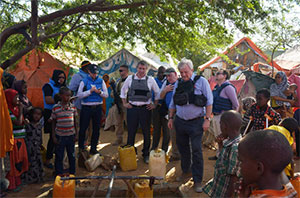 UN Emergency Relief Coordinator Visits Somalia. Credit: UN Photo/Tobin Jones
In recent years, conflicts have broken out across the world with no sign of slowing down or stopping. In times like this, millions of people globally are in dire need of humanitarian aid. Famine, warfare, natural disasters, and economic decline plague a host of nations, including Palestine, Sudan, Chad, Lebanon, and Haiti, to name a few. Humanitarian aid provides millions of people with critical services including healthcare, food, clean drinking water, psychosocial support, housing, and access to education. UN agencies such as the UNDP, UNICEF, the World Food Programme (WFP), UNHCR, UNRWA, and UNEP work with the UN Office for the Coordination of Humanitarian Aid (OCHA) and local organizations to come up with the best possible strategies to support affected communities. At the same time, humanitarian aid and those working on the frontlines are consistently threatened by both actors directly involved in conflict as well as those who are meant to contribute to the international humanitarian regime at large. The near-collapse of United States international aid structures in 2025, including the termination of 83% of USAID’s 6,300 global initiatives, has left millions of people without access to vital humanitarian assistance. 98 million people in 2025, only 65% of people targeted for humanitarian assistance, received the help they needed. In contrast, 123 million people received some form of humanitarian assistance in 2024, and OCHA’s 2026 Global Humanitarian Overview estimates that 239 million people are in need of assistance in 2026. IPS is well-positioned to discuss current initiatives to provide aid and relief through in-depth reporting and opinion content.

The Week with IPS

NEXT STOP - SDGs
Tracking global progress towards a sustainable world
Tracking global progress towards a sustainable world
