Languages
Sunday, November 8, 2026



News and Views from the Global South
Education

The Ticket to an Education in Cote d’Ivoire
The births of tens of thousands of children during Côte d'Ivoire's eight-year rebellion were not formally recorded. Providing these children with birth certificates is one of the mundane yet vital challenges facing the authorities as they work to re-establish the country's public administration.
U.S. Occupy Activists Hit With Stay-Away Orders
A dozen or so people in the Wednesday night crowd of around 150 at the amphitheatre in the public plaza at Oakland City Hall covered their faces with masks or bandanas.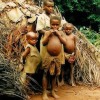
Cameroon’s Baka Pygmies Seek an Identity and Education
Kokpa Pascale Moangue, a Baka Pygmy in southeastern Cameroon, has given his children the one thing he always longed for, but his parents could not give him – an education. And he was able to achieve it by obtaining a simple piece of paper: a birth registration certificate.
Extra Year to Boost School Performance in Sierra Leone
Sierra Leone is instituting major reforms to its education system after the country reported some of the poorest academic results in West Africa. It will start with adding an extra year to the end of secondary school beginning in 2013, and nearly doubling daily classroom hours.
Living on a Meal a Day in Swaziland
Margaret Gamedze earns a living doing laundry for people in her community in Msunduza Township, which lies about a kilometre outside Swaziland’s capital city of Mbabane. But since the country’s fiscal crisis began, she no longer earns enough to pay the rent for her one-roomed mud shack, which she shares with her five children.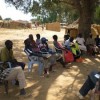
Lessons in Democracy on South Sudan’s Airwaves
It is late afternoon and a group of men and women begin to converge under the shade of a huge mango tree in Yambio town, the capital of South Sudan’s western Equatoria state. The group is not gathering for an ethnic, political or religious meeting. They are here to listen to the radio.Schoolchildren and Teachers Under Fire in El Salvador
Wilber Geovany Hernández was gunned down as he left his night classes at a school in the capital of El Salvador. He was the 11th murder victim among the country's schoolchildren since the school year began on Jan. 23.
The Sound of Peace in Kenya’s Kibera Slum
In a Kibera-bound mini-bus taxi, the driver changes the station just as he turns onto Ngong Road, kilometres away from the Kenyan slum. He tunes into Pamoja Radio 99.9 FM, a local community radio station that broadcasts only in Kibera.
Campus Radio Turns Grassroots Voice
Since it first hit the airwaves more than 50 years ago, the University of the Philippines (UP)'s campus radio has evolved into a community broadcaster, serving as the voice of the people.
Facing Painful Cuts and Tuition Hikes, U.S. Students “Occupy Education”
Shawn Deez, a freshman in peace and conflict studies, says she thinks she knows why some classes are scheduled at the University of California, Berkeley, and some are not. It's corporate influence that makes the difference, she said.
U.N. Meet Holds Governments to Account on Women’s Equality
In 2008, delegates meeting for the annual U.N. Commission on the Status of Women (CSW) agreed that much greater investments in women and gender equality were a critical – and overlooked – aspect of sustainable development.Index Offers Improved Method to Gauge Women’s Progress
If an organisation wants to monitor how its projects in the developing world are affecting women in specific areas of female empowerment, it probably can't, as it lacks the proper tools. But a new system, the "Women's Empowerment in Agriculture Index", is working to change that.
Haiti’s University Languishes in Ruins – Part 2
When the Interim Haiti Reconstruction Commission failed to approve, or even respond to, a proposal by the University of the State of Haiti (UEH) for a unified campus to replace the nine destroyed or badly damaged faculties in the capital, Vice Rector Fritz Deshommes was not surprised at the silence.
Haiti’s University Languishes in Ruins – Part 1
Two years after the earthquake, and despite the proposals written, the consortiums organised and the foreign delegations entertained, the University of the State of Haiti (Université d'Etat d'Haïti or UEH) still has not seen any "reconstruction", and the proposal for a university campus that would unite all 11 faculties remains a 25-year-old dream.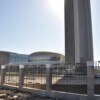
ETHIOPIA: “Significant Progress Towards Improving Livelihoods”
Ethiopia says that the double-digit economic growth the country has experienced over the last seven years has started benefitting its majority by boosting their income and productivity in agriculture and small-scale businesses.SPAIN: Conservative Government’s Reforms Draw Fire
In its less than two months in office, Spain’s new conservative government has begun to introduce sweeping educational and reproductive health reforms, prompting protests from the opposition and from civil society groups, which see them as a throwback to an earlier era.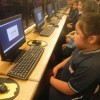
Paraguayan Radio Station Buses Internet to the Barrios
"I want my own computer so that I can talk to my cousins who live in Italy," says eight-year-old Camila Ojeda, sitting in front of a computer monitor on a bus that acts as a mobile cybercafé in the Paraguayan capital.Anger Boils Over as Ranks of Jobless Youth Swell
When images of North London's gutted and burning buildings, broken shop windows and refuse-lined streets appeared on TV screens and front-page headlines during the four-day Tottenham riots last August, many dismissed the damage as the work of "hoodlums" and "delinquents".UNICEF Funding Falls Short Leaving Millions of Children at Risk
If the United Nations Children’s Fund (UNICEF) had 1.28 billion dollars it could help 97 million people around the world.
Radio Static for Ghana’s Community Stations
There is a tension resonating through Ghana’s airwaves, an electric current fueled by rivaling interests between community radio advocates and Ghana’s National Communications Authority.PAKISTAN: Violence, Death Stalk Child Domestic Help
"He was a happy child, my younger brother," Mohammad Ramzan, 18, reminisced, his voice steeped in sadness.« Previous Page — Next Page »





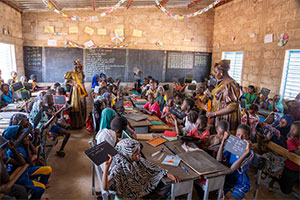 Two teachers work in a classroom in Forces Vives School in Dori, Burkina Faso. Credit: UNICEF/UNI978361
Safe and uninterrupted education is a fundamental right for all children. Education is paramount to global development, as it has been proven that investing in education – especially for girls and children – contributes significantly to economic growth and prosperity. Although more than 1 billion children go to school, many are subjected to conditions that are not conducive to a proper learning environment, including makeshift facilities, a lack of supplies, violence in classrooms, inadequate sanitation, untrained instructors, and widespread school closures. Since 2015, there have been immense gains in education with an increase of 109 million children in school. However, as of 2023, 272 million children are still out of school.
High poverty levels in developing countries also impede children’s access to a proper education. For example, from the early to mid 2000s, Sub-Saharan African nations witnessed a dramatic decline in trained teachers due to inadequate funding in the education sector. Furthermore, major cuts to United States international aid threaten an estimated 23 million additional children's access to education, as USAID‑funded school programmes across Africa and Asia face closure.
Various other factors contribute to the decline of education, notably hunger, which has increased as conflict and climate change interfere with global food production and dissemination. Meanwhile, certain social and cultural practices also impede children’s access to education, with gender inequality, discrimination, child labour, and child marriages preventing millions of children from attending school. Economic conditions such as the inaccessibility of higher education also affect disenfranchised communities across the world. In extreme situations, such as warfare where educational facilities are destroyed in their totality, notably in Gaza and Sudan, entire generations of children might grow up without access to education. Rebuilding educational infrastructure is a long and arduous process, especially when violence persists across generations, and this significantly stunts the development of societal prosperity and stability.
IPS is dedicated to telling the shocking truths about worldwide education through impassioned opinion pieces and comprehensive articles, highlighting global issues that impede worldwide education and the courses of action being taken by organizations such as UNICEF and Education Cannot Wait.

The Week with IPS

NEXT STOP - SDGs
Tracking global progress towards a sustainable world
Tracking global progress towards a sustainable world
