
Friday, November 13, 2026



News and Views from the Global South
Environment

Caught Between Quarries and Sea Erosion
After more than a century of fighting sea erosion by massively dumping granite boulders along the beaches of southern Kerala state, environmentalists and administrators are beginning to see that this has been a costly and ineffective solution.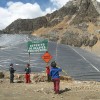
Major Extractives Firms No Longer Ignoring Community Consent
New research from Oxfam, an international aid agency, finds that some of the largest multinational oil and mining companies are increasingly incorporating principles of community consent into their day-to-day operations.
Multilateralism is at a Crossroads
Multilateralism is at a crossroads. This is a crucial matter for environmental and sustainability issues, as we have seen in the Rio+20 Summit, and for trade and other economic matters. The G20 Summit in Los Cabos, Mexico, focused precisely on improving our collective response to the current economic turbulence, which is at the heart of developments in the European Union (EU) as well.Serbians Unite Against Nickel Extraction
A popular Serbian proverb quips that when it comes to politics there are as many opinions as there are people in this central European country of seven million.
Stevia, a Flourishing Business in Spain
On a parcel of land a few kilometres outside the southern Spanish city of Málaga, unemployed activists are growing 2,000 seedlings of stevia, a plant used by the Guaraní indigenous people for centuries as a natural sweetener that is awakening ever greater interest in Spain.
Caribbean Islands Brace for Challenges of Climate Change
Prime Minister Dr. Denzil Douglas remembers how quiet - even uneventful – this tiny twin-island federation was for the first four decades of his life.
Ivorians Deal With European Stink
Nouma Camara, a 40-year-old tailor, remembers waking up on Aug. 20, 2006 to a smell he described as “something catastrophic.” His home in Akouedo village, in Côte d’Ivoire’s commercial capital city of Abidjan, lies adjacent to a large, open-air dumpsite where toxic waste had been dumped the night before.
Easing Air Pollution Would Cool the Planet
The planet can be cooled a whopping 0.5 degrees C with fast action to reduce air pollution from coal-fired power plants, gas fracking, diesel trucks and biomass burning, recent studies show.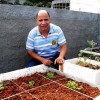
Urban Agriculture Sprouts in Brazil’s Favelas
You do not need to live in the countryside to grow vegetables, as hundreds of thousands of people involved in urban agriculture from Havana to Buenos Aires know very well. Now they are being joined by residents of Rio de Janeiro’s “favelas”.South Invited to ‘De-Grow’
“We should find the way, with our small degrowth movement in the global North, to align ourselves with the environmental justice movement originating with indigenous peoples from the South,” Catalan ecological economist Juan Martinez-Alier said at the third international degrowth conference in Venice, Italy.Rural Mexican Communities Rich in Resources, Poor in Capital
The La Ventanilla community in the southern Mexican state of Oaxaca has not given up in the face of devastating hurricanes, but has organised to protect mangroves and animal species like the Olive Ridley sea turtle.Ecobreves – BRAZIL: Coal Ash Cleans Thermoelectric Effluents
Researchers in Brazil have discovered that the ash produced by burning coal can effectively remove heavy metals from the effluents generated by the same industries that burn it.Ecobreves – HONDURAS: Businesspeople Learn About Sustainable Production
Some 300 businesspeople from northern Honduras have received training on clean technologies in the energy, agriculture and water management sectors.Ecobreves – MEXICO: IDB Finances Green Business Competitiveness
Some 3,000 micro, small and medium-sized enterprises in Mexico will receive financing to make their production more sustainable.
A Lake of Hope and Conflict
Parvez Ahmad Dar climbs three hours to reach the hilltop, generator-equipped tourist centre in Ajaf village, 35 kilometres from Srinagar, to recharge his mobile phone.
Water for Phosphate, Not People
Gafsa region in the south of Tunisia was once an oasis; today the phosphate industry has plunged it into a water crisis.

Mexico, Also a Haven for Illegal Fishing
The authorities in Mexico seem to have thrown in the towel in the fight against illegal fishing, which is hurting fisheries, the environment, and incomes.
Ice-Free Arctic Is “Uncharted Territory”
The melt of Arctic sea ice has reached its lowest point this year, shrinking 18 percent from last year's near-record low.
New Study Claims Popular Herbicide Causes Tumours in Rats
Researchers are warning that RoundUp, a popular herbicide produced by the U.S. agro-giant Monsanto and which is used heavily on U.S. corn and soybeans, cause tumours, liver and kidney failure in rodents.
Q&A: A New Era of Citizen Action Is Dawning
The Global Civil Society Network CIVICUS: World Alliance for Citizen Participation has a new secretary general - Dhananjayan (Danny) Sriskandarajah, who was appointed Monday by the board of directors following the CIVICUS World Assembly in Montreal.EU Cap ‘Only Boosts Biofuels’
The European Commission has announced it will limit the amount of crop-based biofuels used in transport, but its newly proposed measures are not nearly enough to curb the disastrous impact of the EU's biofuel policy around the world. Its effects will only worsen, activists say.« Previous Page — Next Page »


Through our global network of local writers, we are continuing our award-winning coverage of global and local environmental challenges, with a focus on the people for whom the ecosphere matters in a direct way: rural dwellers who have little means to protect themselves against adverse conditions; communities that need to switch to sustainable development in order to survive; poor women and children, who are the most vulnerable in natural disasters. Sponsored by the United Nations Environment Program (UNEP), the United Nations Development Program (UNDP) and The World Bank (WB), IPS also maintains the award-winning Tierramérica, a specialised information service on environment and development.

The Week with IPS

Tracking global progress towards a sustainable world


