Languages
Tuesday, June 30, 2026



News and Views from the Global South
Water & Sanitation

Jakarta Poaches on Farmland Waters
The 18,000 litres of clean water that Jakarta consumes per second are expected to hit 26,000 litres by 2015. The solution? A 54-km stretch of toll road cut through prime paddy land to access the water resources of this salubrious hill district.
Funding Dries Up Even as Rains Worsen Cholera Deaths
As predicted, the beginning of the rainy season in Haiti brought exponential increases in the numbers of people sickened and killed by cholera.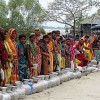
Caught Between Diarrhoea Bugs and Arsenic
Achieving the Millennium Development Goal of providing access to safe drinking water for its 160 million people by 2015 is a tough call for Bangladesh, which is caught between arsenic contaminated groundwater and diarrhoea-causing microbes in its ponds and rivers.Public Funds Could Help Provide Water and Electricity, Researchers Say
For several decades, governments around the globe have turned to privatisation as the best option to help relieve the world's destitute by providing them with health care services, water and electricity. By and large, however, this effort has failed.Private Sector and Conservationists Meet on a Big Date
As schools of whales move to music undersea at image definitions of 6.54 million pixels on the giant ceiling mounted LED screen, 218 X 30 metres in length and width, expectations run high from the International Exposition Yeosu Korea 2012 at harbour town. The expo showcases 104 participating countries’ visions and achievements on the Expo theme: ‘The Living Ocean and Coast: Diversity of Resources and Sustainable Activities’.
“Not a Famine, but an Issue of Food Insecurity”
Millions of Angola’s poorest families are facing critical food insecurity as a prolonged dry spell across large parts of the country has destroyed harvests and killed off livestock.
Water Conflicts Move Up on U.S. Security Agenda
On Wednesday, the United States intelligence community unveiled a first-ever assessment of global water-security issues.
Q&A: Water Infrastructure Falls Far Short in Southern Africa
The cost of maintaining and expanding water infrastructure in southern Africa is high. And while South Africa may be in a better economic position than the rest of the region, it also faces funding challenges that are similar to those of its neighbours.
South African Township Desperate for Safe Drinking Water
Thousands of residents in Diepsloot, a large township north of Johannesburg, South Africa, are queuing for hours to access clean, safe water a week after their supply was contaminated by sewage.
More Toilets in Zimbabwe, Better Livelihoods
Government and sanitation experts say Zimbabwe needs to increase efforts to promote good hygiene and invest in toilets and clean water provision, as the country grapples with a typhoid outbreak.
Steady Water Supply for Zimbabwean City Still a Pipe Dream
Residents of Zimbabwe's water-scarce city, Bulawayo, are concerned about the government’s slow response to finding a permanent source of water to cover their needs.World Bank Supports Harmful Water Corporations, Report Finds
Water privatisation has been proven not to help the poor, yet a quarter of all World Bank funding goes directly to corporations and the private sector, bypassing both governments and its own standards and transparency requirements in order to do so, says a new report released Monday.
Latrines Critical to Keeping Kids in South Sudan’s Schools
Before Bor B Primary School built latrines on the school grounds two years ago, students would leave during their first break to head home. Most did not come back until the next morning.
Women Pay for Kashmir’s Water Woes
Naseema Akhtar, 38, worries that her daily treks to collect clean water from the mountain springs around her village of Bonpora, in Kashmir’s Kupwara district, are getting longer. She is already doing more than seven km every day.
Zimbabwe’s Mopani Worms Disappearing from Rural Diets
Job Mthombeni loves traditional food. One of his favourite culinary delights is Mopani worms, referred to locally as amacimbi, which means caterpillar in Ndebele. At an early age he understood the nutritional value of the worm, which is found in his rural hometown of Plumtree, in southwestern Zimbabwe.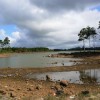
As the Taps Run Dry in Mauritius
Rani Murthy, a public officer who lives in Plaines Wilhems, central Mauritius, wakes at three every morning to wait for the water tanker from the Central Water Authority so that she can collect water for cooking and household chores.
Q&A: Cultural Sensitivity Key to Reaching Rural Women
Empowering rural women in the Iraqi marshlands, who mostly remain off the radar of international support, must involve local languages and dialects as well as local women trainers, says Mishkat Al Moumin, founder of the Iraqi group Women and the Environment Network (WATEO).
ANGOLA: Solar Panels Turning Dirty Water Clean
The brightly painted old shipping container with solar panels on its roof and high-specification filtration devices inside looks out of place in this dusty Angolan village of Bom Jesus, 50 kilometres east of the capital Luanda.
French Alternative Water Forum Says ‘No’ to Privatisation
Back in 2001, Gérard Mestrallet, CEO of the transnational water giant GDF- Suez, highlighted his company’s "commitment to fight for better access" to safe water and sanitation throughout the world, in order to put an end to all deadly water-borne diseases, from children’s diarrhoea to parasitic diseases to dysentery.
Temporary Toilets Threaten Permanent Damage in Haiti – Part 2
Complete with gallery and garden, the 534 wood and plasterboard houses are arranged in neat rows on a gravel plot of former sugarcane land northwest of the capital.
Money for Cleaning Toilets in Haiti Down the Drain? – Part 1
The drawdown of hundreds of non-governmental organisations which have been in Haiti since the disastrous 2010 earthquake was inevitable. But with their departure, so too goes their purse and the millions earmarked for cleaning latrines.« Previous Page — Next Page »


The Week with IPS

NEXT STOP - SDGs
Tracking global progress towards a sustainable world
Tracking global progress towards a sustainable world
