Languages
Saturday, November 14, 2026



News and Views from the Global South
Development & Aid

Africa Needs More Action, Fewer Words to Secure Food and Nutrition
For more than five years, Ritta Achevih was harvesting one bag of maize or less from her small plot each season. She could hardly provide enough healthy food for her big family.
We Must Unite to Protect Education From Attack
Schools, students and teachers continue to be targeted and attacked in countries around the world. Over the past two years, we have seen a substantial increase in the number of attacks on education. Innocent children, adolescents and teachers are being killed, raped and abducted. Schools and universities are bombed, burned down and used for military purposes. Girls and boys are too scared to walk to school and face intimidation and other attacks. These are severe breaches of international humanitarian law and ultimately – and absolutely – inhumane.
As New Covid Boosters Move Forward, Better Outreach is Needed to Save US Lives
This week––nearly ten months after the emergence of the Omicron variant––the United States is rolling out Covid-19 booster vaccines that specifically target newer, now-dominant strains of the virus.
In the Face of Scarcity, Cubans Dream of Once Again Drinking Their Daily Cup of Coffee
While the Cuban government's plans to increase production begin to bear fruit, Mireya Barrios confesses that she seeks every possible way to enjoy a cup of coffee every day, in the face of high prices and scarcity.
Climate Collapse Is Not Inevitable But ‘Great Leap’ Needed
In 1972 the Club of Rome alerted the world to the harm human economic systems were doing to the health of our planet in its seminal, best-selling report, The Limits to Growth. With the devastating impacts of the climate crisis hitting home harder than ever, especially in the Global South, that warning about the dangers of exponential economic growth has been fully vindicated.
Inequitable Global Health Responses Underscore Need for More Self-Sufficiency in Developing Countries
With the outbreak of Monkeypox in non-endemic countries leading to a scramble for vaccines, global health advocates are again calling for equity to be prioritized in the international response.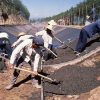
Developing Countries Must Grow More Food
Climate change and war on Ukraine a wake-up call
As our planet continues to heat up, extreme weather has affected many of us. From the west coast of North America across Europe, the Middle East and Asia to Pakistan and New Zealand, wildfires and flash floods have destroyed homes and property and disrupted the daily lives of millions.

Zambian Parliamentarians Tackle Population Issues to Improve Quality of Life for Citizens
Parliamentarians play a decisive role in addressing population issues, as was demonstrated when the majority voted against a private member motion to end the teaching of comprehensive sexuality education (CSE) in Zambia in 2020.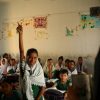
Hundreds of Millions of Children Sentenced to Ignorance
More than two-thirds of 10-year-olds are unable to read and understand a simple text. This shocking finding should be enough to be alarmed about the horrifying fate of an entire generation. But there is much more.
How Development Banks Put Communities at Risk – PODCAST
 A 2021 World Bank-financed project in Uganda was supposed to help communities to sustainably manage local areas and to cope with the impacts of Covid-19. But at one site, the Toro Semliki Wildlife Reserve, the funding emboldened the Uganda Wildlife Authority. A government body, and the project’s implementing agency, the UWA has long prevented indigenous communities from reclaiming their land near the wildlife reserve.

Sand Poachers Fueling Environmental Harm in Zimbabwe
In Chitungwiza, right next to the highway, 36-year-old Nesbit Gavanga and his five colleagues use shovels as they load trucks with sand. The six apparently are in the business of sand-poaching and openly explain that every other day they engage in running battles with environmental officials who seek to curtail land degradation here. The group’s informal sand quarry lies 25 kilometers southeast of the Zimbabwean capital Harare.
COVID-19 Forced Ugandan Teachers to Go Digital, Teaching Them Important Lessons
Before the outbreak of COVID-19, an education officer in the district neighbouring Uganda’s capital Kampala decreed that teachers could not take computers, mobile phones, or tablets into classrooms.
Afghanistan: The Year of Illusions
Afghanistan is where history has taken it! The Trump-Taliban "Agreement for Bringing Peace to Afghanistan," signed on 29 February 2020, is deemed by many as the submission of a superpower to a group that had perpetrated acts of extreme ferocity and terror.
Afghanistan: A Treasure Worth More than a Trillion Dollars
Both mainstream media, international bodies and human rights defenders continue to rightly denounce the Taliban's inhuman abuses against the Afghan people’s basic rights, in particular those of women and girls.
Pakistan’s Climate Catastrophe: Lessons for the World
Monsoon flooding has occurred often in Pakistan but never to the catastrophic extent presently happening. A distinguishing feature of this disaster is that no one blames the flooding’s unprecedented intensity and destructiveness on anything but climate heating. The clear link between the warming atmosphere and the frequency and duration of extreme weather events of this scale should not be lost on the rest of the world.
Eight International Development Priorities for the new UK Prime Minister
The UK’s new Prime Minister (and former Foreign Secretary), Liz Truss, enters Downing Street with a full and urgent in-tray, dominated by the highest inflation rate for 40 years and concerns across the country about the cost-of-living crisis.
1980s’ Redux? New context, Old Threats
As rich countries raise interest rates in double-edged efforts to address inflation, developing countries are struggling to cope with slowdowns, inflation, higher interest rates and other costs, plus growing debt distress.
The Right Policies Can Protect the Workers of Asia and the Pacific
Most of the 2.1 billion strong workforce in Asia and the Pacific are denied access to decent jobs, health care and social protection but there is an array polices and tools that governments can use to remedy these deficiencies and ensure that the rights and aspirations of these workers and their families are upheld and that they remain the engine of economic growth for the region.
Malawian Farmers Reap More from Sunflower, Chillies
Having harvested and graded their sunflower crop instead of taking it to market, every member of Zikometso Productive and Innovation Centre (IPC) brings their produce to the factory for cooking oil production. The IPC falls under the National Smallholder Farmers Association of Malawi (Nasfarm).
The Dying Children Divide
The chances of a child dying before reaching age five years have dropped substantially worldwide during the recent past. However, a significant divide remains among countries as well as within regions in the chances of children dying.
Biomethane, the Energy that Cleans Garbage in Brazil
The increasing productivity with which humankind generates waste has gained at least one sustainable counterpart: the extraction of biogas from landfills, a growing activity in Brazil.« Previous Page — Next Page »


 2026 High-level Political Forum on Sustainable Development. Credit: UN Photo/Eskinder Debebe
In 2015, the United Nations and its Member States adopted the Sustainable Development Goals (SDGs) in an effort to make the world a more sustainable and peaceful place for future generations. Progress on the 17 SDGs has been uneven, and inequality persists across the globe. 10 years after adoption, the 2025 UN SDGs Report revealed that only 35% of the SDG targets are on track, with more than half moving too slowly, and 18% moving backwards from the 2015 baseline. Poverty remains one of the world’s most pressing issues, with hunger, violence, and inequality impeding the opportunities for all people to achieve success. In September 2024, the United Nations Summit of the Future introduced a new goal: to eradicate global poverty by 2030, ensure universal rights to basic services, and increase the overall standard of living in terms of industrialization, economic well-being, citizen health, and literacy. Furthermore, recent shifts in United States foreign aid policy – notably, major budget cuts to USAID and the termination of thousands of development programmes– have severely threatened vital lifelines of financial aid to impoverished communities around the world. Additionally, the United States’ withdrawal from the Paris Climate Agreement has undercut international efforts at sustainable development. With the upcoming 2030 deadline, the UN Secretary-General has called for urgent multilateralism across six priority areas: food systems, energy, digital connectivity, education, jobs and social protection, and climate and biodiversity. IPS sheds light on marginalized communities that struggle on a daily basis to survive and have their stories heard and respected.
Updated by Yilan Batista and Shuli Wong August 2026

The Week with IPS

NEXT STOP - SDGs
Tracking global progress towards a sustainable world
Tracking global progress towards a sustainable world
