Languages
Saturday, November 14, 2026



News and Views from the Global South
Development & Aid
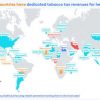
Innovative Financing to Protect Public Health During a Pandemic
Economic recovery since the COVID-19 pandemic has been uneven amidst a cautious loosening of restrictions. But even at the height of the pandemic, it was business as usual for the tobacco industry.
Inflation Targeting Farce: High Costs, Moot Benefits
Policymakers have become obsessed with achieving low inflation. Many central banks adopt inflation targeting (IT) monetary policy (MP) frameworks in various ways. Some have mandates to keep inflation at 2% over the medium term. Many believe this ensures sustained long-term prosperity.
Mexico’s Electric Mobility, Stuck in Fossil Fuel Traffic
The Mexico City government began testing an elevated route for electric buses with great fanfare on Sept. 11, in a bid to promote more sustainable transport. The initiative is part of an incipient promotion of electromobility in the country, amidst pro-fossil fuel energy policies.
UN and Partners Called to Act Urgently with Education in Emergencies at Summit
Suicide bombings shattered Aisha Khurram’s school, and her university was attacked by terrorists – but despite learning in an environment where the walls were colored by blood spatter, it never shook her determination to be educated.
Transforming Education, Transforming The World
Leaders from across the world are uniting at the UN Secretary-General’s Transforming Education Summit to address a global education crisis that threatens to derail decades of development gains and is depriving millions of girls across the world of their inherent human right to access a quality education.
Reimagining Urban Agriculture With Vertical Farming
Cities across the world including New Jersey and California, a State that is home to a multi-billion dollar agricultural industry, have continued to experience climate change linked extreme events including scorching temperatures, extreme heat events, heavy storms and flooding with devastating impacts on agriculture, food security, and food systems.
Remedy in Sight to Subdue an Invasive Poisonous Enemy in Kenya’s Drylands
Hannah Sakamo is worried. She is about to lose yet another goat in less than a month. A pastoralist in Eldepe village, Marigat Sub-County, Baringo County in Kenya’s Rift Valley region, her household’s lifeline is at stake. The goat in question, whose days are now numbered, has consumed pods, or the fruits of the invasive species, Prosopis juliflora, locally known as mathenge.
Achieving Lifelong Independence for People with Disabilities
Vernae Gallaread aspires to teach sign language to people with disabilities and to families who cannot afford sign language lessons for their children.
Full Gender Equality Almost 300 Years Away at Current Rate of Progress
While women in rich societies are paid around 25% less than men for equal jobs, those living in impoverished countries receive by far much lower salaries, if any at all.
Let’s Fight for What Counts to End AIDS, Tuberculosis and Malaria
Next week, taking place alongside the UN General Assembly, President Biden hosts a financing summit in New York of such importance that it will determine if millions of people live, will shape the world around us for years to come and will set the future direction of global health. At least $18 billion is needed to fund the work of the Global Fund to Fight AIDS, Tuberculosis and Malaria.
UN South-South Event Highlights Power of Cooperation for Peace and Development
A UN panel held underlined the impact of South-South Triangular Cooperation (SSTC) projects as vital tools for enabling sustainable development and peace in developing countries.
USA and Russia: Pursuit of Global Hegemony
Can a pitiless, offensive war waged against a sovereign state be justified? In my opinion the answer is an unequivocal “No!”. Ukraine has the right to defend itself against Russia’s reckless and extremely destructive invasion and EU’s support to a neighbouring country attacked by a superior enemy is definitely correct. However, several Latin American intellectuals and leaders are willing to accept Putin’s narrative, instead of Zelensky’s, namely that the war in Ukraine is actually a war between Russia and USA, which by stalling Russia’s and China’s ambitions intends to maintain its supremacy as a superpower, while using Ukraine as a pawn in its power game.
Great Wind and Solar Potential Boosts Green Hydrogen in Northern Brazil
Brazil could become a world leader in the production of green hydrogen, and the northeastern state of Ceará has anticipated this future role by making the port of Pecém, with its export processing zone, a hub for this energy source.
Pakistan Flooding Shows ‘Adapting’ to Climate Change Can Be a Dangerous Illusion
One third of Pakistan is now under water. The scope of the destruction is difficult to fathom, not just the enormity of the devastation its people are facing today, but also the damage to its infrastructure, its buildings, and its economy that will weigh heavily on the country for months and even years to come.
Killings, Abductions Fuel Fear of Taliban Return in North-West Pakistan
The killing of eight people by the outlawed Tehreek Taliban Pakistan on September 13 has given credence to the fear of a new wave of terrorism in the Swat district of Khyber Pakhtunkhwa.
Unsettled Lives in a Troubled World
Cross-continent vacations seem to be the norm once again with the lessening of COVID-19 while new cities are being built with skyscraping $4M condos shooting up in a matter of months, and just-out-of-University millennials launching into their careers with minimum start-off salaries of $75K.
Building Leadership for Teachers in the Developing World
If we truly want to re-imagine the role education can play in the decades to come, it is going to be indispensable to take drastic measures to elevate the role of teachers in developing countries.
What Does the African Continental Free Trade Agreement Hold for Women?
Agnes Opus sells cereals in Busia, the border town between Kenya and Uganda. This is her lifeline through which she caters for her immediate family’s needs from school fees to housing and medical care and support to her extended family. While she dedicates all her energy and time to this work which she loves, she struggles to meet all her needs. She faces many non-tariff barriers including harassment by officials and unclear and ever-changing information on trade requirements.
What Must COP27 Deliver?
Preparations for COP27 in November are proceeding apace and we are now well past the halfway mark between the preparatory meetings in June in Bonn and the start of the summit in Sharm El-Sheikh, Egypt. The agenda for Sharm El-Sheikh is complex and challenging. Furthermore, the meeting is taking place during a time of international turmoil. So, what are the factors influencing whether Sharm El-Sheikh can be a success? And what, exactly, does COP27 need to deliver?
Optimism Prevails Despite Uncertainty Over Revolution to Build Africa’s Food Systems
The 2022 Africa Green Revolution Forum (AGRF) Summit ended in Kigali, Rwanda, with policymakers, activists, researchers, business leaders, and agricultural experts divided over the right pace to build resilient agri-food systems on the continent.
United We Stand to Achieve Sustainable Development
The world today faces a future that is in peril. Our challenges have become more complex and interconnected, as we see the impacts of the COVID-19 pandemic, an uneven economic recovery, a climate emergency, growing inequalities, and an increase in conflicts globally. This year also marks a grim milestone, with over 100 million people forcibly displaced.« Previous Page — Next Page »


 2026 High-level Political Forum on Sustainable Development. Credit: UN Photo/Eskinder Debebe
In 2015, the United Nations and its Member States adopted the Sustainable Development Goals (SDGs) in an effort to make the world a more sustainable and peaceful place for future generations. Progress on the 17 SDGs has been uneven, and inequality persists across the globe. 10 years after adoption, the 2025 UN SDGs Report revealed that only 35% of the SDG targets are on track, with more than half moving too slowly, and 18% moving backwards from the 2015 baseline. Poverty remains one of the world’s most pressing issues, with hunger, violence, and inequality impeding the opportunities for all people to achieve success. In September 2024, the United Nations Summit of the Future introduced a new goal: to eradicate global poverty by 2030, ensure universal rights to basic services, and increase the overall standard of living in terms of industrialization, economic well-being, citizen health, and literacy. Furthermore, recent shifts in United States foreign aid policy – notably, major budget cuts to USAID and the termination of thousands of development programmes– have severely threatened vital lifelines of financial aid to impoverished communities around the world. Additionally, the United States’ withdrawal from the Paris Climate Agreement has undercut international efforts at sustainable development. With the upcoming 2030 deadline, the UN Secretary-General has called for urgent multilateralism across six priority areas: food systems, energy, digital connectivity, education, jobs and social protection, and climate and biodiversity. IPS sheds light on marginalized communities that struggle on a daily basis to survive and have their stories heard and respected.
Updated by Yilan Batista and Shuli Wong August 2026

The Week with IPS

NEXT STOP - SDGs
Tracking global progress towards a sustainable world
Tracking global progress towards a sustainable world
