Languages
Friday, November 20, 2026



News and Views from the Global South
Featured

Providing Practical Support for UN Projects
From electrifying hospitals in Somalia to providing waste management services in Sri Lanka, the UN Office for Project Services works in over 80 countries to provide practical support to help meet the UN’s 17 Sustainable Development Goals.
UN Resolution on Journalist Safety Passed, But Long Way to Go
The UN Human Rights Council (UNHRC) advanced its commitment to the safety of journalists after adopting a groundbreaking resolution with measures for states to ensure journalist protection. But this is only the first step, many note.
Industrialization for a Sustainable Future
World leaders are recognizing the crucial role of industrialization in eliminating absolute poverty and promoting sustainable development. This was especially evident at the recent G20 Summit in Hangzhou, China, which I attended as a member of the delegation of the United Nations Secretary-General, Ban Ki-moon. The gathering demonstrated the growing consensus on the need for renewed efforts to facilitate inclusive and sustainable industrialization as one of the main drivers of economic growth and structural transformation in Africa, and especially the least developed countries (LDCs).
To Effectively Combat Climate Change, Involve Women
London’s Waterloo Bridge over the River Thames is famously known as the “Ladies Bridge,” for it was built largely by women during the height of World War II. On another continent, women fighting a different war have built an equally remarkable structure: a 3,300-meter anti-salt dyke constructed by a women’s association in Senegal to reclaim land affected by rising levels of salt water.
Wave Energy on the Horizon in the Pacific Islands
Waves are ubiquitous in the more than 20 island states scattered across 165 million square kilometres of the Pacific Ocean. But only this year, following a ground-breaking study by oceanographic experts, are they now seen as an economically viable source of renewable energy in the region.
Take a Deep Breath? But 9 in 10 People Worldwide Live with Excessive Air Pollution!
The warning is sharp and the facts, alarming: 92 per cent of the world’s population live in places where levels exceed recommended limits. And 6.5 million people die annually from air pollution.
Murders, Crackdown Create Lingering Climate of Fear in Bangladesh
Like the living room of any proud family, the one in Ajoy Roy’s house boasts photos of the eldest son, Avijit.
Development as Human Right: An Unfulfilled Promise to Billions
As the United Nations commemorated the 30th anniversary of the “Right to Development”, the Group of 77 (G77) and the Non-Aligned Movement (NAM) expressed strong collective support for one of the basic human rights described as a key element in the implementation of the UN’s post-2015 development agenda.
Ending Lingering Hunger in a World of Plenty
With malnutrition continuing to afflict one in nine people globally, the UN has appointed 29 global leaders to help tackle the problem head on.
Uncertainty Mars Potential for Peace in South Sudan
Nearly one month after UN Security Council members visited troubled South Sudan, disagreement reigns over even the limited outside measures proposed to try to bring the security situation in the world's newest country under control.
Colombia Referendum – First Acid Test for Peace
It was like a huge party in Colombia. “Congratulations!” people said to each other, before hugging. “Only 20 minutes to go!” one office worker said, hurrying on her way to Bolívar square, in the heart of Bogotá. And everyone knew what she was talking about, and hurried along too. Complete strangers exchanged winks of complicity.
Poverty Eradication Greatest Global Challenge, Say G77 Ministers
The 133-member Group of 77 (G77), joined by China, unanimously endorsed a Ministerial Declaration strongly reiterating its support to the UN’s post-2015 development agenda, including the 17 Sustainable Development Goals and the Climate Change agreement.
South Sudan and Uganda’s Intertwined History of Violence
Uganda has and continues to play a major role in fueling the conflict in South Sudan. The recent events in South Sudan have brought that moral challenge into a very sharp focus.A Historic Day in Colombia
Betsaida and her family abandoned their home and a small business in the port of Tumaco, in the Pacific of Colombia, and were forced to follow the road that more than 7 million displaced Colombians have as a result of the armed conflict. Their story, and that of millions of victims of the war, is at the heart of what the United Nations Organization is and does. Seventy-one years after its creation, the universal aspiration to end war, reaffirm the fundamental human rights and promote social progress is latent and more crucial than ever.
What Does Leaving No One Behind Really Mean?
One year after UN member states adopted the ambitious 2030 Sustainable Development Agenda their repeated vow to “leave no one behind” seems almost as idealistic and impractical as ever.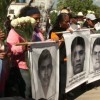
Two years on, Peña Nieto cannot brush off Ayotzinapa stain
There are certain events that mark a turning point in a country. The way a government decides to handle them defines the way they will go down in the history books.
Global South Address Sustainable Development Challenges
On Friday, a group of 134 developing nations, known as the Group of 77 (G77), came together for a meeting to address challenges and solutions in achieving sustainable development. In attendance were G-77 Foreign Ministers, the President of the General Assembly, the UN Secretary-General and other UN senior officials.
Governments Band Together to Address Antibiotic Resistance
The looming threat of a world where even minor infections are deadly has led governments to commit to collective action against antibiotic resistance at the UN General Assembly earlier this week.The Right to Development at 30 Years
It’s had a very useful if sometimes controversial past and it will have great relevance for many more years ahead. That’s the sense one has about the Declaration on the Right to Development as it is commemorated 30 years after its adoption by the United Nations General Assembly in 1986.
Mexico City’s Expansion Creates Tension between Residents and Authorities
People living in neighborhoods affected by the expansion of urban construction suffer a “double displacement”, with changes in their habitat and the driving up of prices in the area, in a process in which “we are not taken into account,” said Natalia Lara, a member of an assembly of local residents in the south of Mexico City.
The Lost Kids at Rome’s Termini Station: Child Migrants Exploited
Rome ..... Termini station, 2:00 pm on a Tuesday afternoon. Five young boys are standing next to the escalators, constantly shifting, dispersing, meeting up again. They are laughing, typing on their phones, chatting, smoking. They seem like average teenagers with fancy hairstyles and smart clothes. But every once in a while, they nervously glance over to the security personnel circling Termini station. Or carefully examine older men walking by.« Previous Page — Next Page »


The Week with IPS

NEXT STOP - SDGs
Tracking global progress towards a sustainable world
Tracking global progress towards a sustainable world
