
Wednesday, October 28, 2026



News and Views from the Global South
Indigenous Rights

U.S. Urged to Push World Bank on Human Rights Safeguards
Rights advocates and community leaders, together with some U.S. lawmakers, are urging the United States to take a more robust role in pushing the World Bank to explicitly incorporate human rights into policies that dictate how and when the bank can engage in project lending and technical assistance.
Indigenous Leaders Targeted in Battle to Protect Forests
Indigenous leaders are warning of increased violence in the fight to save their dwindling forests and ecosystems from extractive companies.
Q&A: “Bolivia Marked the Start of a Major Indigenous Awakening”
He describes himself as someone who was drawn to Marxism as a result of his commiseration with the plight of indigenous people in his country, and he is considered one of the most influential Latin American thinkers of the 21st century.
A Honduran Paradise that Doesn’t Want to Anger the Sea Again
At the mouth of the Aguán river on the Caribbean coast of Honduras, a Garífuna community living in a natural paradise that was devastated 15 years ago by Hurricane Mitch has set an example of adaptation to climate change.
U.S. Joins Global Transparency Tide in Extractives Sector
An unusual combination of industry, government, investors and civil society here is celebrating the United States’ initial acceptance into a prominent global initiative aimed at strengthening transparency and accountability in the extractives industry.
Port Development Brings Progress to Brazil – At a Price
“We are victims of progress,”complained Osmar Santos Coelho, known as Santico. His fishing community has disappeared, displaced to make way for a port complex on São Marcos bay, to the west of São Luis, the capital of the state of Maranhão in Brazil’s northeast.
Carbon-Cutting Initiative May Harm Indigenous Communities
Civil society and advocacy groups are warning that a prominent carbon-reduction initiative, aimed at curbing global emissions, is undermining land tenure rights for indigenous communities, putting their livelihoods at risk.
Pepsi Pledge Signals Momentum on Land Rights
PepsiCo, the world’s second largest food and beverage manufacturer, has agreed to overhaul its longstanding policies around land rights, instituting a series of new safeguards and transparency pledges throughout its global supply chains.
Fight Brews over Wild vs. Hatchery Salmon in U.S. Northwest
Built in 1909, Bonneville Fish Hatchery is one of the oldest and largest in the Columbia River Basin, located in the U.S. Pacific Northwest.
Sun Shines on Forest Women
Chintapakka Jambulamma, 34, looks admiringly at a solar dryer. It’s the prized possession of the Advitalli Tribal Women’s Co-operative Society- a collective of women entrepreneurs that she leads.
Chevron Wins Latest Round in Ecuador Pollution Case
In the latest twist in a 21-year-old environmental pollution case, a U.S. federal judge Tuesday ruled that the victims of massive oil spillage and their U.S. attorney could not collect on a nine-billion-dollar judgement by Ecuador’s supreme court against the Chevron Corporation.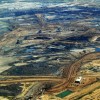
An Environment-Wrecking Pipeline Hangs in Limbo
The Pine Ridge Reservation of the Lakota Nation, in the midwest of the United States, is one of the most abandoned places in the country and in the world.
‘Humanitarian Crisis’ for Ogaden Living Near Ethiopia’s Oil Fields
New allegations of scorched earth evictions of the Ogaden people have raised concerns that a lack of benefit sharing could escalate instability in the region and reinforce separatist tensions as foreign energy companies prepare to extract oil and gas from troubled southeastern Ethiopia.
Chagos Islanders ‘Will Not Give Up’ Fight to Return Home
“The Marine Protected Area (MPA) created around the Chagos archipelago is a new obstacle that the British government has placed in our path to prevent us from going back to our homeland,” claims Olivier Bancoult, leader of the Chagos Refugees Group (CRG).

Bolivia’s Anti-Racism Law – Not Worth the Paper It’s Written On?
Three years ago Bolivia passed a law to combat discrimination and racism, but no one has been convicted as a result, in spite of hundreds of legal complaints.
After Slowdown, Global Fight for Land Rights at Tipping Point
Global trends towards a strengthening of legal rights over land for local and indigenous communities appear to have slowed significantly in recent years, leading some analysts to warn that the fight for local control over forests has reached an inflection point with a new danger of backtracking on previous progress.
Prosecution of Forced Sterilisations in Peru Still Possible
Shelving the case of the forced sterilisations of more than 2,000 women in Peru during the Alberto Fujimori regime was a surprise move by the prosecutor in charge. What happened? An IPS investigation found that legal avenues to pursue justice have not been exhausted.
U.S. Tightens Development Safeguards
Development activists and rights watchdogs are applauding a surprise strengthening of environmental and human rights policies governing U.S. development funding and overseas financial assistance.
Kenya’s Scorched Earth Removal of Forest’s Indigenous
Kenyan government security forces are forcefully evicting thousands of people, including the indigenous Sengwer tribe, from the Embobut forest in western Kenya by burning homes and possessions in an effort to promote forest conservation, safeguard urban water access and “remove squatters”.
Dammed Rivers Create Hardship for Brazil’s Native Peoples
The Itaparica hydroelectric power plant occupied land belonging to the Pankararu indigenous people, but while others were compensated, they were not. They have lost land and access to the São Francisco river, charge native leaders in Paulo Afonso, a city in northeastern Brazil.
Africa’s Billions that the Poor Won’t Touch
With its two-trillion-dollar economy, recent discoveries of billions of dollars worth of minerals and oil, and the number of investment opportunities it has to offer global players, Africa is slowly shedding its image as a development burden.« Previous Page — Next Page »





The planet's roughly 350 million indigenous peoples took notable steps on the international stage in the last decade. They got the world's governments to agree to create a body to represent them at the United Nations, the Permanent Forum on Indigenous Issues, and to appoint a special rapporteur responsible for their human rights. In 2007 a Universal Declaration on the Rights of Indigenous Peoples was approved by the UN. Yet the living conditions of most "tribal", "aboriginal", "native" or "first" peoples remain precarious. IPS, with its network of contributors at the UN and linked to indigenous communities worldwide, is committed to tracking the world community's efforts to do justice to the rights and aspirations of these peoples, with a special current focus on Latin America's 40 million rural indigenous peoples.

The Week with IPS

Tracking global progress towards a sustainable world
