Languages
Wednesday, November 11, 2026



News and Views from the Global South
Asia-Pacific

The Future of the Pacific Ocean Hangs in the Balance
The immense scale of the Pacific Ocean, at 165 million square kilometres, inspires awe and fascination, but for those who inhabit the 22 Pacific island countries and territories, it is the very source of life. Without it, livelihoods and economies would collapse, hunger and ill-health would become endemic and human survival would be threatened.
Australian Politicians Woo Sydney’s “Other Half”
With a population of over 1.2 million people spread across 14 government districts, the suburbs of western Sydney have long been perceived as the impoverished “other half” of Australia’s economic, financial and political hub, serving as a de facto port of entry for incoming migrant workers.
A Hope That Didn’t Sail for Malaysian Youth
They had voted for “ubah” or change. What the youth of Malaysia got instead seems to be more of the same.
When the Health System Is Taken Ill
Leaning on her daughter’s arm in the post-operative ward of a hospital in Srinagar, capital of the northern Indian state of Jammu and Kashmir, Raja Begam views the anti-infection pill she is being offered with a large dose of suspicion.
Art Confronts Maldives’ Climate Change Controversy
On the quay leading to the Arsenale exhibition complex, a block of ice melts in a rare blast of spring warmth. Elsewhere in the city, coconuts bob on the choppy waters of the canals during the opening week of the 55th Venice Biennale.
Japan Seeks to Remake Asia-Africa Relationship
Acutely aware of China’s strong presence in resource-rich Africa, Japan, the world’s third largest economy, is beefing up its relations with the continent. Participants at a high-level donor conference hosted by Japan this week stressed the need for closer engagement, not through the traditional grants and assistance loans that have hitherto defined the relationship, but rather through trade and investment led by the Japanese private sector.
Q&A: Iran’s Medical Shortages: Who’s Responsible?
For two years, reports have surfaced describing medical supply shortages in Iran, some with devastating consequences, as debate continues to rage about who's responsible - the Iranian government or the sanctions regime.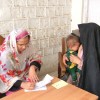
Good Health Lies Just Across the Border
Muzaffar Shah, a shopkeeper from Kabul, sits in a hospital waiting room, desperate for news. He has travelled nearly 300 km to get to the Khyber Teaching Hospital in Peshawar, capital of northern Pakistan’s Khyber Pakhtunkhwa (KP) province, where his wife is now in intensive care.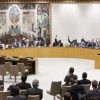
U.S., China Seek Common Ground on North Korea
U.S. President Barack Obama is set to host his Chinese counterpart Xi Jinping on Jun. 7-8 for their first bilateral meeting as heads of state. Figuring on their agenda is how to address a precarious North Korea, which is armed with a small nuclear arsenal and vying for a bigger one.
The Himalayas Are Changing – for the Worse
Residents of Jhirpu Phulpingkatt, a village nestled in the foothills of the Himalayas, about 110 km from Nepal’s capital Kathmandu, are on red alert.
Local Communities Invest Money – and Hope – in Ecotourism
Forty-five-year-old Serah Kei began building her artificial island and eco-lodge resort 26 years ago in Langa Langa Lagoon, located on the Solomon Island’s Malaita Province, about four hours by boat from the nation’s capital, Honiara. Kei, a single mother, paid for the construction by undertaking the laborious task of making and selling ‘shell money’ and finally opened Serah’s Lagoon Hideaway, which accommodates up to twelve visitors, in 2006.
Walmart, Gap Seek Separate Safety Standards for Bangladesh Factories
Top U.S. companies are now in negotiations to agree on new safety standards for their clothing-producing contractors in Bangladesh, a month after a garment factory’s collapse in Dhaka killed more than 1,100 workers.
India’s Maoists Are Far From Spent
They chopped down trees and used them to barricade the road, then retreated into the dense forests of the remote Sukma district, located in the central Indian state of Chhattisgarh, to await their quarry.Kazakhstan’s Green Zone on Slippery Slope
A group of flashmobbers took to the slopes in southeastern Kazakhstan on a crisp March morning this year to spell out a heartfelt SOS with their bodies.
Religious Intolerance Taints Award for Indonesian President
Standing in front of the two-metre concrete wall, barbed wire and corrugated iron fence that surrounds his mosque, Muhammad Iqbal says he feels like a second-class citizen in his own country.OP-ED: Iranian Elections: Not About Us
For Washington, obsessed with matters Iranian, it may be hard to accept a simple fact: Iran’s Jun. 14 presidential election is an Iranian event. If we attempt to make it about us, we will find ourselves on the same road that has previously led to multiple failures: Iran-contra; “goodwill begets goodwill”; and a non-existent two-track policy.
Sex Educators Struggle to Break Taboos
Liberian journalist Mae Azango says she spent a year living “like a bat, going from tree to tree” with her daughter in order to escape religious fanatics who were threatening to kill her for exposing the practice of female genital mutilation in her home country last year.
Afghan Media Brace for Financial Drought
As Afghanistan prepares for the 2014 withdrawal of foreign forces that have occupied this country for over a decade, investors are already beginning to bid a hasty retreat amid rumours that “chaos” and civil war will replace NATO’s boots on the ground late next year.
Courage to Combat Domestic Violence
Selina, a resident of a small community in Malaita, the most populous province in the Solomon Islands, watched in horror as a man standing on the road in front of her house tore the clothing off his wife, then beat her and inflicted wounds with a knife.
Youth Say Coca-Cola Is Easier to Find Than Condoms
“If I am thirsty and want a bottle of Coca-Cola I can get it, no matter where in the world I am. Why can’t I get contraceptives or sexual heathcare?” asked Carlos Jimmy Macazana Quispe, a youth representative from Peru currently in Kuala Lumpur for the third edition of the Women Deliver global conference on the "health and well-being of women and girls."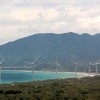
Ramping Up Renewable Energy in the Philippines
As the Philippines grapples with frequent power outages and a growing demand for energy, government agencies and private groups say the answer to the country’s power needs may lie in alternative sources.« Previous Page — Next Page »





The Week with IPS

NEXT STOP - SDGs
Tracking global progress towards a sustainable world
Tracking global progress towards a sustainable world
