Languages
Sunday, October 25, 2026



News and Views from the Global South

Civil Society Condemns Immunity for Sitting African Leaders Accused of Serious Crimes
Mary Wacu lived in the Rift Valley region for 10 years prior to the 2007/08 post-election violence that rocked Kenya after a disputed general election.
OPINION: Building a Sustainable Future – The Compact Between Business and Society
Can we envision a day when a critical mass of companies is investing in a better world? Where business is delivering value for the long-term – not just financially, but also socially, environmentally and ethically? Over a decade ago, it was hard to imagine, but we can now say with confidence that a global movement is underway.
Amid Crisis, Puerto Rico’s Retirees Face Uncertain Future
A feeling of insecurity has overtaken broad sectors of Puerto Rican society as the economy worsens, public sector debt spirals out of control, and the island's creditworthiness is put in doubt.
Nepal Landslide Leaves Women and Children Vulnerable
Living in a makeshift tarpaulin shelter, which barely protects her family from the torrential rainfall or scorching heat of this remote village in southern Nepal, 36-year-old Kamala Pari is under immense stress, worrying about her financial security and children’s safety.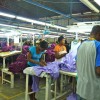
World Bank Urged to Rethink Reforms to Business-Friendliness Report
Civil society groups from several continents are stepping up a campaign urging the World Bank to strengthen a series of changes currently being made to a major annual report on countries’ business-friendliness.
Threat of Hydropower Dams Still Looms in Chile’s Patagonia
After its victory in a nearly decade-long struggle against HidroAysén, a project that would have built five large hydroelectric dams on wilderness rivers, Chile’s Patagonia region is gearing up for a new battle: blocking a quiet attempt to build a dam on the Cuervo River.
OPINION: Towards a Global Governance Platform
Inter Press Service News Agency has braved severe political assaults and financial tempests since 1964, when Roberto Savio and Pablo Piacentini laid its foundation as a unique and challenging information and communication system.
How Midwives on Sierra Leone’s Almost Untouched Turtle Islands are Improving Women’s Health
Emmanuel is a male midwife. At the age of 26, he lives and works on one of eight islands off the southwest peninsular of Sierra Leone, an hour by speedboat from Mattru Jong, the capital of Bonthe District.
OPINION: Boosting Resilience in the Caribbean Countries
Having lived and worked for more than a decade in four Caribbean countries, I have witnessed firsthand how Small Island Developing States (SIDS) are extremely vulnerable to challenges ranging from debt and unemployment to climate change and sea level rise.
Building Public Trust is a Key Factor in Fighting West Africa’s Worst Ebola Outbreak
The nurse carefully packs the body into a plastic bag and then leaves the isolation tent, rinsing his feet in a bucket of water that contains bleach. Then he carefully takes off his safety glasses, gloves and mask and burns them in a jerry can.
These Children Just Want to Go Back to School
Between government efforts to wipe out insurgents from Pakistan’s northern, mountainous regions, and the Taliban’s own campaign to exercise power over the Federally Administered Tribal Areas (FATA), the real victims of this conflict are often invisible.
The Time for Burning Coal Has Passed
“People have gathered here to tell their politicians that the way in which we used energy and our environment in the 19th and 20th centuries is now over,” says Radek Gawlik, one of Poland’s most experienced environmental activists. “The time for burning coal has passed and the sooner we understand this, the better it is for us.”
U.N. Conference Set to Bypass Climate Change Refugees
An international conference on small island developing states (SIDS), scheduled to take place in Samoa next week, will bypass a politically sensitive issue: a proposal to create a new category of "environmental refugees" fleeing tiny island nations threatened by rising seas.
Breakthroughs and Hurdles in Colombia’s Peace Talks
Three major advances were made over the last week in the peace talks that have been moving forward in Cuba for nearly two years between the Colombian government and the FARC guerrillas, while the decades-old civil war rages on.
OPINION: This Flower Is Right Here
Where have all the flowers gone? Yes, of course, those are the opening words of a beautiful song made famous by such illustrious singers as Joan Baez, Harry Belafonte, Vera Lynn and the Kingston Trio, among others. It was a great number made greater by the different styles in which singers of different musical temperaments belted it out.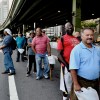
New York’s Homeless Pushed Deeper into the Shadows
Joe sits on newspapers spread on the sidewalk by the entrance to midtown's Grand Central Station. His head rests in his hands, only looking up when coins from passersby clink into his paper cup.EBOLA COULD SINK AFRICA’S RISING DREAMS
An airlift of emergency supplies needed for those treating Liberians with the virus Ebola was launched last weekend by the U.N. children’s fund, Unicef.SOCIAL MEDIA CONFAB IN SOUTH AFRICA
Some 400 delegates from 36 African countries are expected to fill the halls at the 18th annual Highway Africa conference for media activism which takes place Sept. 7-8 at Rhodes University, Grahamstown.
Bangladeshi Girls Seek Equal Opportunity
Until five years ago, Shima Aktar, a student in Gajaghanta village in the Rangpur district of Bangladesh, about 370 km northwest of the capital Dhaka, was leading a normal life. But when her father decided that it was time for her to conform to purdah, a religious practice of female seclusion, things changed.
When Land Restoration Works Hand in Hand with Poverty Eradication
Tugging at the root of a thorny shrub known as ‘juliflora’, which now dots the village of Chirmiyala in the Medak District of southern India’s Telangana state, a 28-year-old farmer named Ailamma Arutta tells IPS, “This is a curse that destroyed my land.”
The Darker Side for Gays in Lebanon
In a country where civil liberties remain the prerogative of the powerful and wealthy, the Lebanese gay scene is to be treaded carefully.« Previous Page — Next Page »





The Week with IPS

NEXT STOP - SDGs
Tracking global progress towards a sustainable world
Tracking global progress towards a sustainable world
