Languages
Monday, November 9, 2026



News and Views from the Global South
Active Citizens

Q&A: “The Children Take on an Artist’s Lovely Identity, from a Young Age”
Venezuela’s youth symphony orchestras that have enamoured audiences on several continents are a social programme aimed at fighting poverty and marginalisation, more than an artistic endeavour, says the founder of the initiative, José Antonio Abreu.
Q&A: ‘Mismatch Between Commitments and Action on Biodiversity’
The eleventh meeting of the Conference of the Parties to the Convention on Biological Diversity (COP 11 CBD) approaches amidst a hailstorm of public protest against the ‘tragedy of the commons’ – the rapid loss of biodiversity in forests, oceans and indigenous community farmlands.
Europe’s Support Crucial for Ongoing Arab Spring
The Arab Spring is far from over. The protracted conflict in Syria continues to swallow lives while the international community, hamstrung by geopolitics, looks on; riots across the Muslim world following the release of a low-budget American movie that is disrespctful of the Prophet Muhammad resulted in the death of U.S. Ambassador Chris Stevens in Libya; Tunisia and Egypt continue to struggle with post-revolutionary economies; and a string of democratically elected Islamist governments has taken root in newly-liberated countries throughout the region.
Social Inclusion the Key to Venezuela’s Elections
Whoever wins Venezuela's presidential elections on Sunday Oct. 7 will do so as a result of the idea of social inclusion, which has become dominant in an electorate whose social and political features have changed radically in the last decade.
Pakistani Workers Slaving Brick by Brick
One does not always need a time machine to travel into the past – a visit to a typical brick kiln in Pakistan’s Punjab province is enough to evoke a time when human beings were traded like animals and slavery was rampant.
Q&A: UN Urges Men to Join Call to Action to End Violence against Women
“We have to expand the sense of urgency and indignation towards gender violence,” Dr. Ana Güezmes, UN-Women regional director for Mexico, Central America, Cuba and the Dominican Republic, told IPS on a recent visit to the Cuban capital.
India Divided Over Green Light to Multinational Retailers
Thousands of shopkeepers in Sir Stuart Hogg Market in Kolkata, the business hub of eastern India’s biggest city, are all talking about one thing: what they will do when multinational companies invade their ancient marketplace.
Self-Financing that Works for the Poor
"We were used to losing, so a group of us said to ourselves: let's lose something here," said Carmen Caravallo, describing the start of a "bankomunal", a self-managed microfinance fund based on investment, in her rural community in eastern Venezuela.‘Elderly Can be Contributors, Not a Burden’
According to popular belief, the world’s rapidly ageing societies face the risk of poverty, dementia and loneliness. But not necessarily so, says a United Nations publication unveiled in Japan Monday. Better management by governments can support a better life for the elderly, and lead them to becoming important contributors to society, it says.

People Speak Up Over Disputed Islands
While the 40th anniversary of the normalisation of Japan-China relations passed under a dark shadow of rising tensions and bitter territorial disputes in East Asia, a strand of citizen-based diplomacy at the grassroots level is emerging in Japan as a path towards regional reconciliation.
Filipino Netizens Reject Cybercrime Act
A newly enacted cybercrime law in the Philippines has raised fears that not only online media but also ordinary netizens could be persecuted for exercising their freedom of expression.
Debt Swallows Everything in Spain
One of every three euros that the Spanish government plans to spend in 2013 will go to servicing the public debt.
Army’s Former Sex Slaves Testify in Guatemala
"In the garrison they had rooms where they would rape us; sometimes there were three, four or five soldiers,” Rosa Pérez*, one of the women used by the Guatemalan army as a sex slave during this country’s civil war, testified in court.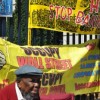
U.S.: Consumer Protection Agency Takes on “Financial Tricks and Traps”
In the wake of the epidemic of home foreclosures, banking scandals and resulting massive financial regulation overhaul two years ago known as the Dodd-Frank legislation, the U.S. government created a new federal agency to protect consumers from being taken advantage of by banks and other institutions.
Breast Milk Banks, From Brazil to the World
Cíntia Rose Regis, 23, not only breastfeeds her 16-month-old daughter Zelda but has also been donating 600 ml a week of breast milk to a mothers’ milk bank in Brazil over the last year.Serbians Unite Against Nickel Extraction
A popular Serbian proverb quips that when it comes to politics there are as many opinions as there are people in this central European country of seven million.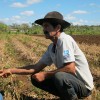
Starving for an Equitable Food System
The root cause of hunger and malnutrition for millions of people worldwide lies in the severely skewed and unfairly structured hierarchy of policymakers, not in natural disasters or food shortages, according to the Right to Food and Nutrition Watch 2012 (RTFN Watch) released Tuesday.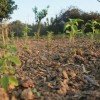
Stevia, a Flourishing Business in Spain
On a parcel of land a few kilometres outside the southern Spanish city of Málaga, unemployed activists are growing 2,000 seedlings of stevia, a plant used by the Guaraní indigenous people for centuries as a natural sweetener that is awakening ever greater interest in Spain.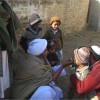
Vaccines Get Past Taliban, Finally
Over thirty thousand children in the remote Tirah area of the Khyber Agency, part of the Federally Administered Tribal Areas (FATA) in Northern Pakistan, have waited four years for protection from polio, a viral disease that is sometimes referred to as ‘infantile paralysis’ due to its crippling effects on children.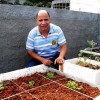
Urban Agriculture Sprouts in Brazil’s Favelas
You do not need to live in the countryside to grow vegetables, as hundreds of thousands of people involved in urban agriculture from Havana to Buenos Aires know very well. Now they are being joined by residents of Rio de Janeiro’s “favelas”.
Child Abuse on the Rise in Bahrain
A thirty-four-year-old Bahraini teacher, whose son was abused five years ago, has hitherto refused to tell anyone the story, afraid that she will be blamed for failing to protect her child who is now eight years old.« Previous Page — Next Page »





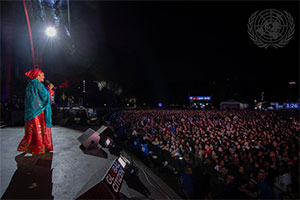 Global Citizen Festival in New York. Credit: UN Photo/Eskinder Debebe
Active citizens are committed to social change because they know that it is achievable. However, major political challenges face active citizens across the world. For example, in authoritarian regimes in Latin America where the hegemonic party has been in power for decades on end, protestors and human rights activists face enormous repression and struggle to materialize their advocacy into concrete results. The same can be said for Africans, where a shift towards elected government in recent decades has yet to translate into an effective voice in decision-making. Now, the Strengthening Citizen Demand for Good Governance, which uses evidence-based approaches – funded by DFID's Governance and Transparency Fund – seeks to raise their voices.
In 2025, the CIVICUS Monitor’s People Power Under Attack report revealed that civic freedoms are severely limited in 122 of 198 countries and territories, and only 7.2% of the global population now lives in countries where civic space is open. Through partnership with the Overseas Development Institute (ODI) and CIVICUS, IPS reporters across the continent will seek to define the extent and limits of state capability, government accountability and the responsiveness of leaders to the needs of citizens.

The Week with IPS

NEXT STOP - SDGs
Tracking global progress towards a sustainable world
Tracking global progress towards a sustainable world
