Languages
Wednesday, November 11, 2026



News and Views from the Global South
Active Citizens

Colombian Landowners, Peasants Listen to Each Other
Colombia's large-scale agricultural producers and peasant farmers managed to listen to each other for the first time about the core cause of the decades-long armed conflict: the concentration of rural land ownership and the social and economic development of the countryside.First Strike in Quarter Century Exposes Treatment of Migrant Labour in Singapore
The first workers strike in 26 years in this affluent Southeast Asian city-state has triggered some soul-searching about the treatment of migrant labour and the low wages they are paid.Surprise Visits to Prisons in Argentina to Prevent Torture
Representatives of the Argentine state and of non- governmental organisations will be visiting prisons without prior warning, beginning next year, to prevent inmates from being tortured and abused – a problem that persists three decades after the end of the dictatorship, often with fatal results.
Endangered Bird Falls Prey to Royal Hunting Games
Every year, between November and January, the Indus Flyway bears witness to a migration of an endangered bird species – the houbara bustard – from Central Asia to the deserts of Pakistan.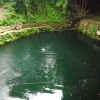
Community Water Management Stuck in Legal Limbo*
Community-based water supply systems, which serve thousands of rural communities in Mexico, are seeking official recognition under the new federal legal framework currently under development.
Q&A: In “Black and Cuba”, A New Approach to Discussing Race
Robin J. Hayes has always been one to break boundaries. Most recently, she is doing so with her latest documentary film, "Black and Cuba", which explores how African-Americans and Afro-Cubans can learn from each other about community-building and public debates on racism in their countries.
Detained at the Eastern Border – Part 2
Twenty-two years ago today, on Dec. 18, 1990, the United Nations General Assembly adopted the International Convention on the Protection of the Rights of All Migrant Workers and Members of Their Families.
Women and Activists Lament Japan’s Election Outcome
The return to power of Japan’s conservative and hard-line Liberal Democratic Party (LDP) on Sunday indicates that voters traded urgently needed social and environmental reforms for traditional male-led leadership, according to analysts here.
Q&A: Documentary Tackles Child Abuse in Cuba
“Child abuse merits a different, in-depth approach. The objective of this film is to make the problem visible and promote debate and reflection,” says Eric Corvalán, director of a documentary that required “breaking through walls.”
Big Landowners Block Rural Development Law in Guatemala
An “integral rural development law” to promote access to land, employment and other rights for small farmers is bogged down in the Guatemalan Congress due to opposition from large landowners, who see it as an attempt at land reform.
Environmental Uncertainties Halt Deep Sea Mining
The world’s first deep sea mineral (DSM) mining venture in the Bismarck Sea off the northern coast of Papua New Guinea in the southwest Pacific has come to a halt after two years of development.
Occupation Can’t Stifle Innovation
Afnan Hamad stands proudly in front of a booth at the Ramallah Cultural Palace exhibition hall, three plastic bottles filled with discoloured liquid on the table in front of her.
Kashmiri Separatists Scrabble for Political Relevance
Amid growing scepticism among Kashmiri people that the separatist leadership has lost relevance in the region’s fast-changing political landscape, the All Parties Hurriyat (Freedom) Conference – an alliance of separatist political parties and religious and social groups - is making a Herculean effort to reclaim some relevance in this disputed region.
Some Take Cannabis Illicitly, Israelis Take it Seriously
With his shaky hands, eighty-year-old Moshe Roth can barely pour the green powder into his pipe. Seated in a wheelchair, he murmurs in a trembling voice, “Even the scent’s good.”
Unregulated Drug Market Has Deadly Impact in Pakistan
When 26-year-old Muhammad Qasim, a rickshaw driver from Lahore’s low-income Shahadra settlement, died last month, his family was shocked to learn that the cause of death was an overdose – of cough syrup.Civil War on the Egyptian Horizon
Egypt is facing its worst political crisis since the January 2011 revolution ousted former dictator Hosni Mubarak, with analysts warning of a possible civil war. Furthermore, unlike during the revolution, opposition to the current regime is bitterly divided between Islamists and more secular Egyptians.
Case to Abolish Gambian Death Penalty Falls on Toothless Court
The court of justice for the West African economic community is expected to hear a civil society case calling for the abolition of the death penalty in the Gambia this December, four months after the execution of nine prisoners shocked the world.
Cambodian Activists Challenge ASEAN Policies
For a brief moment last month, mainstream international media turned the spotlight on Cambodia, one of the world’s 48 least developed countries (LDCs), as a high-level visit from U.S. President Barack Obama and the annual summit of the Association of Southeast Asian Nations (ASEAN) gave this country of 14.3 million people a glamorous edge.
First Muslim Human Rights Commission to Launch End December
Gathering for the first time here in Washington, representatives of the newly established human rights commission of the Organisation of Islamic Cooperation (OIC) stated Thursday that they plan to start their substantive work by the end of the month.
Q&A: For Day Labourers, Life Is a Game of Russian Roulette
They wait in parking lots, hoping for someone to come and offer them a few days of work. This work could entail anything from cleaning to construction, and though they may not be trained or equipped for these types of jobs, they have little choice, for they are day labourers, undocumented immigrants with no legal or moral support and subject at the mercy of their employers.
War Widows Struggle in a ‘Man’s World’
Sita Tamang’s husband went missing sometime in 2004, two years before Nepal’s civil war came to an end. A native of Dharan, a town about 600 kilometres southeast of Kathmandu, Tamang waited seven years after his disappearance before she tried to claim compensation offered by the government after a 2006 peace deal ended this country’s bloodshed.« Previous Page — Next Page »





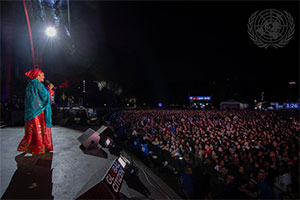 Global Citizen Festival in New York. Credit: UN Photo/Eskinder Debebe
Active citizens are committed to social change because they know that it is achievable. However, major political challenges face active citizens across the world. For example, in authoritarian regimes in Latin America where the hegemonic party has been in power for decades on end, protestors and human rights activists face enormous repression and struggle to materialize their advocacy into concrete results. The same can be said for Africans, where a shift towards elected government in recent decades has yet to translate into an effective voice in decision-making. Now, the Strengthening Citizen Demand for Good Governance, which uses evidence-based approaches – funded by DFID's Governance and Transparency Fund – seeks to raise their voices.
In 2025, the CIVICUS Monitor’s People Power Under Attack report revealed that civic freedoms are severely limited in 122 of 198 countries and territories, and only 7.2% of the global population now lives in countries where civic space is open. Through partnership with the Overseas Development Institute (ODI) and CIVICUS, IPS reporters across the continent will seek to define the extent and limits of state capability, government accountability and the responsiveness of leaders to the needs of citizens.

The Week with IPS

NEXT STOP - SDGs
Tracking global progress towards a sustainable world
Tracking global progress towards a sustainable world
