Languages
Thursday, September 24, 2026



News and Views from the Global South
Cooperatives

Q&A: Reworking Finance to Serve People and the Environment
The wake of the global financial crisis, as many national governments in Europe cut back on services to citizens and used public money to rescue banks, taught many people a valuable lesson.
Waste Pickers in Colombia Earn Formal Recognition
Nora Padilla, one of the six winners of this year’s Goldman environmental prize, dedicates her days to organising informal recyclers in the Colombian capital, where the city’s eight million inhabitants are just now reluctantly starting to classify their garbage at source.
Rural Colombia Takes Its Place on the Agenda
International Fund for Agricultural Development (IFAD) initiatives working to overcome poverty and improve food security in the Colombian countryside can make a positive contribution to government efforts to tackle some of the most neglected problems facing this South American country.
The Brazilian State of Pará, Where Land is Power
Toiling beneath a blazing sun in the humid heat of the Amazon, Waldemar dos Santos, 60, tends the community garden he shares with other landless peasant farmers in the Brazilian state of Pará, as they wait for agrarian reform to provide them with the opportunity for a better life.
The Other Side of the Coin in Spain
Wholemeal rye bread, lettuce and chard are some of the products on offer from the El Caminito urban vegetable garden at the small organic produce market in this southern Spanish city, with prices set in "comunes", one of more than 30 social currencies circulating in the country.
The Siege Is Rubbish
“For the past five years we’ve collected garbage by traditional means: donkey and cart,” says Abdel Rahem Abulkumboz, director of health and environment at the Municipality of Gaza. The municipality of Gaza alone produces 700 tons of waste daily, Kumboz says. More than half of this waste is collected daily by 250 donkey carts.
From Brazil’s Family Farm to the School Lunchroom Table
Separating Maria Gomes Morais’ farm and a school in Rio de Janeiro are fields, hills and dirt roads that are impassable when it rains. But a school meal programme has forged a path linking the fresh produce harvested by small farmers like her with the need to provide nourishment to 45 million schoolchildren around Brazil.
“We Aren’t Fighting Poverty Here, We’re Improving the Quality of Life”
The residents of San Crisanto, a small communal village nestled in an idyllic setting in the southeastern Mexican state of Yucatán, have learned that valuing and protecting natural resources can generate employment and income.
Murder of Landless Workers’ Leader Recalls Brazil’s Dictatorship
The execution-style killing of a leader of the Landless Workers' Movement in a sugarcane plantation in the southeastern Brazilian state of Rio de Janeiro, where bodies of opponents of the dictatorship were incinerated in the 1970s, recalls one of the most tragic chapters in this country's history.
OP-ED: Learning from Haiti’s Goudou Goudou
On a hillside overlooking Port-au-Prince, a muscular Haitian man in a green tank top raises a heavy steel pry bar over his head and brings it down into a hole, shattering a bit of Haiti’s limestone skeleton.
In Haiti, Aid Dollars Corroded Social Fabric
A World Bank-funded community development project in Haiti appears to have inadvertantly harmed or even dissolved some of the grassroots organisations it was designed to strengthen.
Reviving Family Farming in Angola, Carrot by Carrot
"We never used to eat carrots, but now we like them," said Rebeca Soba, admiring her vegetable garden, an island of diversity in the midst of a vast sugarcane plantation. Vegetable gardening has been introduced at the Capanda Agroindustrial Pole (PAC) as a source of income for local small farmers.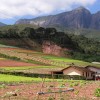
Small Rural Businesses in Brazil Set Sights on Domestic Market
"Canjinjin has special powers," said Deize Coelho de Barros. The recipe for this local liquor, made from a mixture of herbs, was handed down from her African ancestors, and is seen as a sort of traditional "Viagra" in her homeland, the western Brazilian state of Mato Grosso.Rural Co-ops in Central America Speak Out on Climate Change
Brenda Salazar has her sights set on two things: a good organic cacao harvest for the cooperative she belongs to in northern Nicaragua, and for the governments of Central America to heed the ideas of peasant farmers who have organised to fight climate change.
Cooperatives as Business Models of the Future
When the International Year of Cooperatives (IYC) concluded last week, some of the overwhelming success stories highlighted at a two-day interactive session came both from developing and developed countries, including India, Brazil, China, Kenya, Rwanda, Ethiopia, Italy, France and the United States.
For Champions of Degrowth, Less Is Much More
The concept of degrowth is not a very comfortable one in overdeveloped countries such as the United States.
Cooperatives Cushion the Blows of Hunger
“One in eight people goes to sleep hungry every day,” according to the ‘State of Food Insecurity in the World 2012’, a document released annually by the Food and Agriculture Organisation (FAO).
Cooperatives Help Women Farmers Tighten Ranks
It is a tried and tested truth that when women come together in groups they can address their issues more powerfully than they can as individuals.
Senegal Finds the Cooperative Way to More Food
Over the past two years, millet production has reached record levels in Dya, a rural community in the Kaolack region of central Senegal, where the Agricultural Value Chains Support Project (PAFA) is supporting two farmers' collectives.
Local Money Sets Its Own Stamp
Bristol, the eighth most populous town in the UK, has launched a local currency - the Bristol Pound. That makes it one of the largest localities to embrace a complementary currency among more than 2,500 worldwide.
Q&A: Disaster Resilience Starts with Grassroots Women
Women and girls can be powerful agents of change, but they are disproportionately affected by disasters because of social roles, discrimination and poverty.« Previous Page — Next Page »


The Week with IPS

NEXT STOP - SDGs
Tracking global progress towards a sustainable world
Tracking global progress towards a sustainable world
