
Saturday, October 17, 2026



News and Views from the Global South
Environment

Heatwave and Drought Hit South America’s Crops and Economy
Brazil, Argentina and Paraguay, the three major agricultural producers in South America, are currently experiencing a prolonged period of drought and low water levels in their main rivers. This is severely impacting harvests, as well as river transport of important summer crops, with maize and soybeans the main casualties.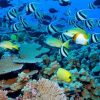
Future of Coral Reefs in the Time of Climate Change
Coral reefs are one of the world’s most biologically diverse and productive ecosystems. They provide abundant ecological goods and services and are central to the socio-economic and cultural welfare of coastal and island communities – throughout tropical and subtropical ocean countries – by contributing billions of dollars to the local and global economies, when combined with tourism and recreation.
Climate Inaction, Injustice Worsened by Finance Fiasco
Many factors frustrate the international cooperation needed to address the looming global warming catastrophe. As most rich nations have largely abdicated responsibility, developing countries need to think and act innovatively and cooperatively to better advance the South. Climate action The world is woefully offtrack to achieving the current international consensus that it is necessary to keep the global temperature rise by the end of the 21st century to no more than 1.5°C (degrees Celsius) above pre-industrial levels two centuries ago.
Renewables Are Cheaper Than Ever – So Why Are Household Energy Bills Only Going up?
Not for the first time, global energy markets are in turmoil. Internationally traded gas prices more than quadrupled in 2021. In their wake, many energy suppliers have gone bust and household bills across Europe are set to soar. Energy prices are driving up the cost of living and inflation, but this is also a moment to realise the old saying: “never waste a good crisis”.
A Call to Action on Living Lands
If the ocean is the lifeblood of the Commonwealth, then forests are the lungs that breathe life into its whole system. From the vast boreal woodlands of Canada to the rich primary forests of Papua New Guinea, the Commonwealth covers nearly a quarter of all forest land in the world - an estimated 900 million hectares. These biodiversity havens not only house about half of all animal species on earth, they also give us clean air, water and food, supporting the livelihoods of millions of people while tackling climate change.
Climate Action Incomplete Without Women’s Contribution
Judy Wangari is one of an estimated 800,000 smallholder potato farmers who, according to the National Potato Council of Kenya, contribute at least 83 percent of the total potato production.
Clean Water, Decent Toilets, Hygiene Challenge for Southern African Community
The toilets in the maternity wing of Namatapa Health Centre in the populous Bangwe Township in Blantyre, Malawi’s commercial city, fell into disrepair a few years ago. So, pregnant women who come to deliver their babies and their guardians use two pit latrines.
The Time to Protect Our Oceans is Now
There is no other place in the world like Costa Rica’s Cocos Island National Park. The waters surrounding the island--covered with tropical forests--are a playground to countless shivers, or schools, of sharks, including hammerhead sharks, whitetip reef sharks and whale sharks.
Too Harmful: The March of Salt and Plastics on World Soils
There are more under-reported consequences of human activities unmatching the rhythm of Mother Nature. Such is the case, among many others, of the growing salinisation and ‘plastification’ of the world's soils.
Environmental Disasters Creating More Migrants Within Countries – Podcast
 In the final months of 2021 you likely saw countless media reports of migrant men, women and children getting blocked at borders trying to enter various countries. Two flashpoints were the Mexico-US border and the border between Poland and Belarus, but there were many others.
Ecstasy as Zimbabwe’s Smallholder Farmers Secure European Pineapple Market
In her wildest dreams, smallholder farmer Sarudzai Sithole never imagined that her pineapples could someday stock the produce section of Europe’s finest supermarkets.
Why Does Yangtze River Have its Own Protection Law?
The new Yangtze River Protection Law (YRPL), which came into effect on March 1, 2021, is China’s first legislation on a specific river basin. The Yangtze River is China’s longest and largest river system, stretching over 6,300 kilometres and has over 700 tributaries. With a drainage basin covering more than 1.8 million square kilometres, approximately one-fifth of China’s total land area, the river basin is home to over 40% of the country’s population.
Severe Water Stress, Absolute Scarcity for 2 to 4 Billion Humans by 2025
Now it comes to the scary water crises, as it is estimated that, globally, over two billion people live in countries that experience high water stress.
The Impact of Air Pollution on Child Health
Air pollution is a global public health crisis, and air pollution levels in India are among the highest in the world, posing a heavy threat to the country’s health and economy. According to the 2019 World Air Quality Report, India is home to 21 of the 30 most polluted cities in the world. In these cities, air quality can be as much as 10 times over the safe limits of air pollution recommended by the WHO.
Uruguay Launches Sovereign Bond Linked to Climate Targets
Sustainable finance continues to expand in Latin America, as governments and companies take advantage of growing interest among investors in instruments that protect biodiversity and respond to the climate crisis. In 2020, more than US$16 billion of green, social and sustainable bonds were issued in the region.
2021: Yet Another Challenging Year in Review
 In 2020, 1.8 million people across the world died from COVID-19.
At the end of 2021 the death toll has risen to over 5.3 million.
In 2020, 1.8 million people across the world died from COVID-19.
At the end of 2021 the death toll has risen to over 5.3 million.

Interview with Siddharth Chatterjee, UN Resident Coordinator in China, on the Beijing Winter Olympics and Paralympics
The interview was originally conducted by Beijing Daily. Beijing Daily: The world is paying attention to whether the Beijing Winter Olympic Games can be successfully held 6 months after the Tokyo Olympics in the face of COVID-19. How do you evaluate the preparations for the Beijing Winter Olympics? What is the key to the success of the Beijing Winter Olym-pics? What kind of signal will the successful hosting of the Beijing Winter Olympics send to the world?
2021: A Grim Year for Planet Earth
Between the COVID-19 pandemic and the deadly manifestations of the climate crisis, there were few places to hide for most of us in 2021. Ageing billionaires riding booming stock markets could take their first flights into space in their own rockets, but for the rest of Planet Earth’s 8 billion people with their feet on the ground it was a year of placing hope in the hands of scientists and our political leaders to turn the tide.
America Faces a Fateful Crossroad in 2022
When my assistant handed me copy expressing my greetings and good wishes for 2022 for approval, I paused, thinking, “is that all I can say, just hope for a better, brighter new year?”
Sugarcane Gas Opens New Horizons for Energy Agriculture – Video
Nothing is wasted from sugarcane, one can conclude from the biomethane production process at the Cocal plant, a Brazilian company that produces sugar, ethanol, electricity and other by-products from sugarcane agro-industrial waste. 
Blue Ocean Solutions for Climate Resilience and Accelerated Development
Seychelles’ 115 islands are an exotic ocean ecosystem of beaches, coral reefs, and unique plant and animal species. Concerned with the impacts of climate change, the country has committed to decarbonize by 2050.« Previous Page — Next Page »





Through our global network of local writers, we are continuing our award-winning coverage of global and local environmental challenges, with a focus on the people for whom the ecosphere matters in a direct way: rural dwellers who have little means to protect themselves against adverse conditions; communities that need to switch to sustainable development in order to survive; poor women and children, who are the most vulnerable in natural disasters. Sponsored by the United Nations Environment Program (UNEP), the United Nations Development Program (UNDP) and The World Bank (WB), IPS also maintains the award-winning Tierramérica, a specialised information service on environment and development.

The Week with IPS

Tracking global progress towards a sustainable world


