
Monday, November 9, 2026



News and Views from the Global South
Environment

Drinking Water Shortages Plague Pakistan Region
“We have to purchase water from the municipalities for our daily use. The water column has gone too deep and it is hard to pump out the commodity,” said Muhammad Shakir, a resident of Hayatabad, an upscale town in Peshawar, the capital of Khyber Pakhtunkhwa (KP).
African Experts Say the Continent Must Address Livestock Methane Emissions
Increasing calls for Africa to reduce methane emissions from livestock continue to be met with controversy, and livestock scientists say methane is a forgotten short-term climate pollutant with significant global warming potential that Africa cannot continue to overlook.Nepali Farmers Get Climate Smart
Bimala Bajagain, a farmer and mother of three, wears a fading red kurta and appears older than her age at 35. She offers us plates of salted guavas at the porch of her quake-damaged house.
Preserving Mangroves Provides Protection and Food Security
 At the dawn of Indian Independence, Government of India’s commitment to food security – in addition to the impact of the Bengal Famine – was haunted by corruption, hoarding and mismanagement, resulting in ongoing food insecurity among the indigenous people in Tamilnadu and Orissa that lasted for more than five decades,

One-Third of Papua New Guineans Suffering Drought Crisis
An estimated one-third of the population of Papua New Guinea, the most populous Pacific Island state, is now suffering in from the country’s worst drought this century and experts predict El Nino’s influence will carry on through March 2016.
Leading Powers to Double Renewable Energy Supply by 2030
Eight of the world’s leading economies will double their renewable energy supply by 2030 if they live up to their pledges to contribute to curbing global warming, which will be included in the new climate treaty.
Climate Change Bites Kenyan Tea Farmers
You wouldn't typically expect heavy rainfall and frost in East Africa. But the Earth's climate is changing - and this is affecting one of the world's largest tea-producing regions, in central Kenya.
El Nino Creates Topsy Turvy Weather in Sri Lanka
Residents in the Sri Lankan capital Colombo and outlying areas have been waking up to misty mornings of late. A decade ago, regular mist in this area just above the equator would have been a noteworthy event. These days, it is a regular occurrence in some parts north of the capital.Climate Change May Increase World’s Poor by 100 Million, Warns World Bank
The UN’s heavily-hyped Sustainable Development Goals (SDGs), which were approved by more than 160 world leaders at a summit meeting in September, are an integral part of the world body’s post-2015 development agenda, including the eradication of hunger and poverty by 2030.
Frequent Floods Intensify Migration, Food Security in Pakistan’s Mountainous North
Ishaq Khan shivers as he recounts an unfortunate flash flood in 2010, which covered his maize and potato crop with mud and washed away over a dozen fruit trees he planted 45 years ago.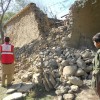
Disaster Strikes Pakistan’s Khyber Region, Aid Efforts Slow in Coming
Jauhar Shah lost everything. His house came tumbling down while his family was sleeping. He survived but his wife and daughter did not. The October 26 tremor measuring 8.1 Richter scale changed his life forever.
Africa Demands for More Input to Save the Climate
African civil society organisations championing for climate justice have criticised the Intended Nationally Determined Commitments (INDC’s) presented to the United Nations Framework Convention on Climate Change, calling them “weak, inadequate and not ambitious enough.”
Kenya’s Market-Based Youth Project Changing Lives
Though the Kenyan government has demonstrated a commitment to lift its youth out of poverty, particularly those in the informal settlements, projects designed for youth continue to be crippled by rampant corruption.
Caribbean Agriculture Looks to Cope with Climate Change
Climate change represents a clear and growing threat to food security in the Caribbean with differing rainfall patterns, water scarcity, heat stress and increased climatic variability making it difficult for farmers to meet demand for crops and livestock.
Urgently Needed: Studies Linking Land Degradation, Migration, Conflict and Political Instability
Some 135 million people could be displaced by 2045 as a result of land desertification, according to a recent UK ministry of defence report. This figure could rise to 200 million who are displaced by other climate change impacts like natural disasters by 2050, said British environment refugee specialist Norman Myers.
Climate Change Threatens Flavour of Argentine Wine
Purple garlic that is losing its color? More translucent wine? Climate change will also affect the flavours of our food in the absence of measures to mitigate the impacts of global warming, which are already being felt in crops that are basic to local economies, such as in the Argentine province of Mendoza.
Open Data – Still Closed to Latin American Communities
Open data policies in Latin America have not yet enabled communities to exercise their right to access to information, consultation and participation with regard to mining or infrastructure projects that affect their surroundings and way of life.
Zimbabwe’s Mega Dam Project Could Flounder in the Face of Climate Change
Zimbabwe's planned Batoka Gorge power project on the Zambezi River is expected to generate 2,400 megawatts (MW) of electricity, upward from an initial 1,600 MW, but the worsening power cuts that are being blamed on low water levels have renewed concerns about the effects of climate change on mega dams.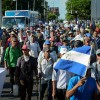
Nicaragua’s Interoceanic Canal, a Nightmare for Environmentalists
The international scientific community’s fears about the damage that will be caused by Nicaragua’s future interoceanic canal have been reinforced by the environmental impact assessment, which warns of serious environmental threats posed by the megaproject.
Interview: “‘We’re Not Independent Enough,” says ASEAN Rights Commission Chair
(IPS Asia-Pacific) – Although it is six years old, few know what the ASEAN Intergovernmental Commission on Human Rights (AICHR) does. It has been called toothless, though its creation was seen as a step forward given the principle of non-interference in the 10-member Association of Southeast Asian Nations (ASEAN).
How Climate Change Threatens Zambia’s Already Fragile Nutrition Record
It is slightly after 10 o’clock in the morning and 48-year-old Felix Muchimba of Siamuleya village in Pemba district has just finished having breakfast – a traditional drink called Chibwantu, made of maize meal and grit.« Previous Page — Next Page »





Through our global network of local writers, we are continuing our award-winning coverage of global and local environmental challenges, with a focus on the people for whom the ecosphere matters in a direct way: rural dwellers who have little means to protect themselves against adverse conditions; communities that need to switch to sustainable development in order to survive; poor women and children, who are the most vulnerable in natural disasters. Sponsored by the United Nations Environment Program (UNEP), the United Nations Development Program (UNDP) and The World Bank (WB), IPS also maintains the award-winning Tierramérica, a specialised information service on environment and development.

The Week with IPS

Tracking global progress towards a sustainable world


