Languages
Saturday, November 28, 2026



News and Views from the Global South
Regional Categories

Uncertainty Mars Potential for Peace in South Sudan
Nearly one month after UN Security Council members visited troubled South Sudan, disagreement reigns over even the limited outside measures proposed to try to bring the security situation in the world's newest country under control.
Colombia Referendum – First Acid Test for Peace
It was like a huge party in Colombia. “Congratulations!” people said to each other, before hugging. “Only 20 minutes to go!” one office worker said, hurrying on her way to Bolívar square, in the heart of Bogotá. And everyone knew what she was talking about, and hurried along too. Complete strangers exchanged winks of complicity.
Poverty Eradication Greatest Global Challenge, Say G77 Ministers
The 133-member Group of 77 (G77), joined by China, unanimously endorsed a Ministerial Declaration strongly reiterating its support to the UN’s post-2015 development agenda, including the 17 Sustainable Development Goals and the Climate Change agreement.
AfDB Injects USD 1 Billion to End Youth Unemployment in Africa
The African Development Bank (AfDB) together with the International Institute of Tropical Agriculture (IITA) is embarking on the initiative “Jobs for Youth in Africa”, aimed to put an end to youth unemployment in the continent by creating 8 million agribusiness jobs within five years. The president of the AfDB, a former Nigerian minister of agriculture, Akinwumi Adesina visited the Agripreneurs training centre at IITA today, and reiterated his commitment to the initiative.
Unregulated Promotion of Mining in Malawi Brings Hazards and Hardships
Nagomba E. is no longer young; her hip is giving her trouble and her back is stooped from years of bending over her corn and rice fields. Yet every morning, at the crack of dawn, the wiry 74-year-old sets out on a strenuous half-hour walk to fetch water from a nearby river so that her ailing husband can take a bath. Despite her limp, Nagomba moves fast and with the sure-footedness of a mountain goat.A Historic Day in Colombia
Betsaida and her family abandoned their home and a small business in the port of Tumaco, in the Pacific of Colombia, and were forced to follow the road that more than 7 million displaced Colombians have as a result of the armed conflict. Their story, and that of millions of victims of the war, is at the heart of what the United Nations Organization is and does. Seventy-one years after its creation, the universal aspiration to end war, reaffirm the fundamental human rights and promote social progress is latent and more crucial than ever.
What Does Leaving No One Behind Really Mean?
One year after UN member states adopted the ambitious 2030 Sustainable Development Agenda their repeated vow to “leave no one behind” seems almost as idealistic and impractical as ever.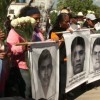
Two years on, Peña Nieto cannot brush off Ayotzinapa stain
There are certain events that mark a turning point in a country. The way a government decides to handle them defines the way they will go down in the history books.
Canals Save Cambodian Farmers in Times of Drought
In Kampong Speu province, when the wet weather doesn't come, as in other parts of Cambodia, it can affect whether food goes on the dinner table.
Governments Band Together to Address Antibiotic Resistance
The looming threat of a world where even minor infections are deadly has led governments to commit to collective action against antibiotic resistance at the UN General Assembly earlier this week.The Right to Development at 30 Years
It’s had a very useful if sometimes controversial past and it will have great relevance for many more years ahead. That’s the sense one has about the Declaration on the Right to Development as it is commemorated 30 years after its adoption by the United Nations General Assembly in 1986.
Mexico City’s Expansion Creates Tension between Residents and Authorities
People living in neighborhoods affected by the expansion of urban construction suffer a “double displacement”, with changes in their habitat and the driving up of prices in the area, in a process in which “we are not taken into account,” said Natalia Lara, a member of an assembly of local residents in the south of Mexico City.
The Lost Kids at Rome’s Termini Station: Child Migrants Exploited
Rome ..... Termini station, 2:00 pm on a Tuesday afternoon. Five young boys are standing next to the escalators, constantly shifting, dispersing, meeting up again. They are laughing, typing on their phones, chatting, smoking. They seem like average teenagers with fancy hairstyles and smart clothes. But every once in a while, they nervously glance over to the security personnel circling Termini station. Or carefully examine older men walking by.
Population Growth Extremes: Doublers and Decliners
While the world’s population of 7.4 billion is growing at 1.1 percent per year – about half the peak level of the late 1960s – enormous differences in demographic growth among countries are increasingly evident and of mounting concern to countries and the international community.
Rural Growth in Colombia: Yara Steps In to Increase Productivity
Following the recent peace agreement between the Colombian government and the FARC in Cartagena which concludes a 52-year armed conflict, the country is now geared toward improving productivity in its agricultural sector. Yara International, a leader in crop nutrition and farmer support, has taken the timely step of supporting the government’s efforts on this issue.
Community Conversations in Ethiopia Prevents Exploitative Migration
Five years ago, when Meliya Gumi’s two daughters, Gifty* and Chaltu,* aged 16 and 18, migrated to Dubai and Qatar respectively, as domestic workers, everyone thought they were moving towards a better future. As a widowed mother of eight with little resources, living in the village of Haro Kunta in the Oromia region of Ethiopia, Gumi had a difficult time making ends meet.
UN Refugee Summits Fall Short for Children
As Olympic swimmer Yusra Mardini opened the floor for US President Barack Obama’s leaders’ summit on refugees, she embodied a hope unavailable to most child refugees.
Yazidi Survivor of ISIL Appointed UN Goodwill Ambassador
Yazidi Nadia Murad - who survived being kidnapped and forced into sexual slavery by ISIL - was honoured by the UN on Friday September 16 for her work to help human trafficking survivors.
Stories of Hope from a Cameroon Refugee Camp
 To the world they are known as “refugees”. Nameless, faceless, all the same. But each of them have a different story to tell, of their lives, who they lost, and how they got here. Fleeing from the devastating conflict in the Central African Republic (CAR), today they are rebuilding their lives, one day at a time, in a camp in Cameroon. UN Women supports economic and social rehabilitation to some 6,250 vulnerable women and survivors of sexual and gender-based violence there. These are some of their stories.

Migrant Workers in the Gulf Feel Pinch of Falling Oil Prices
In the Al Quoz industrial area of Dubai in the United Arab Emirates (UAE), a number of medium and large-sized buses can be spotted transporting workers clad in company uniforms to distant worksites early in the morning. In the evening or, in certain cases, late at night, these workers are brought back to labour camps in the same buses.
Jobs Are Crucial for Peace, Stem Radicalization and Violent Extremism in Kenya
Today 21 September 2016 is the International Day of Peace. Kenya has the largest number of jobless youth in East Africa, putting a strain on the economy’s growth and also threatening peace and security when hopeless youth gravitate towards violent extremist groups.« Previous Page — Next Page »


The Week with IPS

NEXT STOP - SDGs
Tracking global progress towards a sustainable world
