Languages
Wednesday, November 11, 2026



News and Views from the Global South
Active Citizens
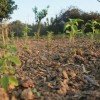
Stevia, a Flourishing Business in Spain
On a parcel of land a few kilometres outside the southern Spanish city of Málaga, unemployed activists are growing 2,000 seedlings of stevia, a plant used by the Guaraní indigenous people for centuries as a natural sweetener that is awakening ever greater interest in Spain.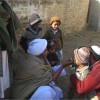
Vaccines Get Past Taliban, Finally
Over thirty thousand children in the remote Tirah area of the Khyber Agency, part of the Federally Administered Tribal Areas (FATA) in Northern Pakistan, have waited four years for protection from polio, a viral disease that is sometimes referred to as ‘infantile paralysis’ due to its crippling effects on children.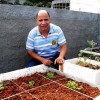
Urban Agriculture Sprouts in Brazil’s Favelas
You do not need to live in the countryside to grow vegetables, as hundreds of thousands of people involved in urban agriculture from Havana to Buenos Aires know very well. Now they are being joined by residents of Rio de Janeiro’s “favelas”.
Child Abuse on the Rise in Bahrain
A thirty-four-year-old Bahraini teacher, whose son was abused five years ago, has hitherto refused to tell anyone the story, afraid that she will be blamed for failing to protect her child who is now eight years old.Nobel Laureate Calls for Armed Intervention in Nigeria
On the International Day of Peace, Nobel Prize winner Wole Soyinka visited the United Nations - and called for armed intervention against the terrorist group Boko Haram in his home country of Nigeria.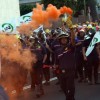
Spain at Risk of Chronic Protests
Over the past year and a half, Spain has been caught up in constant street protests against measures taken to combat the severe economic crisis. But some say the movement has failed to come together around concrete proposals.
U.N. Chief Jabs Media for Overblown Coverage of Hate Crimes
When the United Nations commemorated International Day of Peace last week, the celebrations were marred by news of widespread rage in the Islamic world, a continued bloody civil war in Syria, suicide bombings in Iraq and Afghanistan and violent demonstrations in Pakistan, Indonesia and Bangladesh against a video caricaturing the Prophet Muhammad.Rural Mexican Communities Rich in Resources, Poor in Capital
The La Ventanilla community in the southern Mexican state of Oaxaca has not given up in the face of devastating hurricanes, but has organised to protect mangroves and animal species like the Olive Ridley sea turtle.
Alternative to Wikileaks Arises in Iceland
With the imprisonment of Bradley Manning and detainment of Julian Assange, WikiLeaks is effectively on hold. But that does not mean that leaks and whistleblowing activities have stopped.
Assad and Opposition Both Losing
Two floors have been ripped from the top of an apartment block in Aleppo in northern Syria. A lone man stands amidst the rubble four stories up after a missile from one of his own government’s fighter jets smashed into the building that morning. With his arms crossed, the solitary figure surveys the destruction around him.
A Day Off to Riot in Peace
The holiday declared by the Pakistani government on Friday seems to have given free rein for the rioting and killing over the American film that is disrespectful of Prophet Muhammad.
Water for Phosphate, Not People
Gafsa region in the south of Tunisia was once an oasis; today the phosphate industry has plunged it into a water crisis.

Second Chance For an African Green Revolution
As the world searches desperately for ways to boost food production by at least 70 percent by 2050 to feed an increasingly hungry planet, many are looking to Africa as the place where a large part of this potential can be realised, mainly for its huge portion of arable land.
Human Rights Education Shows Its Potential
The impact of human rights education, a rising star, is highlighted in a short documentary sponsored by United Nations experts and civil society.
Q&A: A New Era of Citizen Action Is Dawning
The Global Civil Society Network CIVICUS: World Alliance for Citizen Participation has a new secretary general - Dhananjayan (Danny) Sriskandarajah, who was appointed Monday by the board of directors following the CIVICUS World Assembly in Montreal.
Religious Groups in Brazil Condemn Attacks on Islam
The Brazilian Commission for Combating Religious Intolerance (CCIR) condemned the film “Innocence of Muslims" as “disrespectful” of the prophet Mohammed, and organised a mass protest demanding respect for freedom of religion in this country.
Post-Arab Spring Democratic Gains at Risk, Group Warns
Almost two years after popular uprisings swept across the Middle East and North Africa, rights advocates are warning that ominous backsliding is taking place in countries across the region and beyond.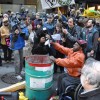
Occupy Celebrates Birthday, Forges Ahead
Led by a spirited brass band and waving placards decrying corporate greed, hundreds of occupiers took to San Francisco streets Monday to celebrate Occupy Wall Street’s first birthday, culminating in a ceremony where they symbolically ripped apart loan documents.
Q&A: “Pacification of Favelas Not a Real Public Policy Yet”
The “pacification” of the favelas in this Brazilian city, aimed at driving out armed groups and fighting drug trafficking, has not yet become a fully effective public policy, says Eliana Sousa Silva, who has lived in one of Rio’s shantytowns for nearly 30 years.
Occupy Marks Anniversary Amid Grim Economic Climate
Amid a heavy police presence, thousands of anti-capitalist activists in marked the one-year anniversary of the Occupy Wall Street movement against the U.S. political and economic system, which they say favours billionaires at the expense of the middle and working class.
New Plans to Protect Nature
At the close of the ten-day World Conservation Congress that ran from Sept. 6-15 on the South Korean island of Jeju, members of the convening International Union for Conservation of Nature (IUCN) agreed on an ambitious four-year action plan for protecting global natural resources.« Previous Page — Next Page »





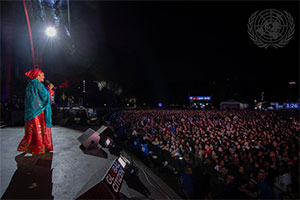 Global Citizen Festival in New York. Credit: UN Photo/Eskinder Debebe
Active citizens are committed to social change because they know that it is achievable. However, major political challenges face active citizens across the world. For example, in authoritarian regimes in Latin America where the hegemonic party has been in power for decades on end, protestors and human rights activists face enormous repression and struggle to materialize their advocacy into concrete results. The same can be said for Africans, where a shift towards elected government in recent decades has yet to translate into an effective voice in decision-making. Now, the Strengthening Citizen Demand for Good Governance, which uses evidence-based approaches – funded by DFID's Governance and Transparency Fund – seeks to raise their voices.
In 2025, the CIVICUS Monitor’s People Power Under Attack report revealed that civic freedoms are severely limited in 122 of 198 countries and territories, and only 7.2% of the global population now lives in countries where civic space is open. Through partnership with the Overseas Development Institute (ODI) and CIVICUS, IPS reporters across the continent will seek to define the extent and limits of state capability, government accountability and the responsiveness of leaders to the needs of citizens.

The Week with IPS

NEXT STOP - SDGs
Tracking global progress towards a sustainable world
Tracking global progress towards a sustainable world
