Languages
Wednesday, November 18, 2026



News and Views from the Global South
Civil Society

8.2 Million Iraqis In Need of Emergency Humanitarian Assistance
As fighting drags on between Iraqi armed forces and the Islamic State in Iraq and the Levant (ISIL), millions of refugees caught between the warring groups are in dire need of humanitarian assistance.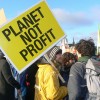
Opinion: For a New Generation of Climate Activists, It’s Too Late to Wait
I remember pretending not to be so excited. There was this nervous energy that kicked up my heels as I prowled through the U.N. negotiations that afternoon. You could feel it all around. Circling our meeting point like sharks quietly rounding our prey. If you knew what to look for, you would know exactly what was about to happen.
‘Legal Friends’ Fight Gender Violence in Rural India
Mamta Bai, 36, distinctly remembers the first time the police came to her village: it was December 2014 and her neighbour, Purva Bai, had just been beaten unconscious by her alcoholic husband, prompting Mamta to make a distress call to the nearest station.
As Jamaica’s Prime Forests Decline, Row Erupts Over Protection
For Jamaica, planting more trees as a way to build resilience is one of the highest priorities of the government's climate change action plan. So when Cockpit Country residents woke up to bulldozers in the protected area, they rallied to get answers from the authorities.
Pacific Civil Society Swings Out Against Free Trade Agreement
Fourteen Pacific Island Forum countries are currently locked in negotiations with their two largest economic neighbours, Australia and New Zealand, to forge a new regional free trade agreement called ‘PACER Plus’, which supporters believe will boost economic growth in the region.
U.N. Sets Up Independent Panel to Probe Sexual Abuses in CAR
The United Nations, which came under heavy fire for its failure to act swiftly on charges of sexual abuse by French troops in the Central African Republic (CAR) last year, has decided to set up an External Independent Review (EIR) to probe these allegations.
Climate Fund Rolls Out Amid Hopes It Stays “Green”
After a difficult infancy, the Green Climate Fund is finally getting some legs. The big question now is what direction it will toddle off in.
Zimbabwean Women Weave Their Own, Beautiful Future
 Seventy-seven-year-old Grace Ngwenya has an eye for detail. You will never catch her squinting as she effortlessly weaves ilala palm fronds into beautiful baskets.

Native Communities in Mexico Demand to be Consulted on Wind Farms
“It hurts us that our land is affected, and the environmental impacts are not even measured. Wind farm projects affect streams and hurt the flora,” said Zapotec Indian Isabel Jiménez, who is taking part in the struggle against the installation of a wind park in southern Mexico.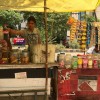
The Neglected Street Vendors of India
For the past nine years, 27-year-old Jignesh has been hawking bed sheets on the bustling pavements of Janpath, a major throughway in India’s capital, New Delhi, as kamikaze traffic swirls around him.
Growing Mobilisation Against Introduction of Fracking in Spain
Thousands of people in Spain have organised to protest the introduction of “fracking” – a controversial technique that involves pumping water, chemicals and sand at high pressure into shale rock to release gas and oil.Indigenous Voices Ignored in Financing Panamanian Dam Project
Indigenous people who would be directly affected by the impact of a hydroelectric project in Panama were not consulted despite national and international human rights obligations to obtain their free, prior and informed consent, according to a just-released report.
Thousands Rally to Demand Freedom for Puerto Rican Activist
Children in strollers held placards. Those unable to make it into the streets leaned out of high-rise apartment building windows, shouting support to the river of protestors below. For hours, several city blocks became a mass of red and blue, as scores of people waved the national flag of Puerto Rico. One name was on everyone’s lips, but the cause was broader than a single man.
Garment Sweatshops in Argentina an Open Secret
The death of two Bolivian boys in a fire and the mistreatment and sexual abuse of a young Bolivian woman put the problem of slave-like labour conditions in clandestine sweatshops back in the headlines in Argentina.
Australia’s ‘Stolen Generations’ Not a Closed Chapter
Every year since 1998, Australia has marked ‘National Sorry Day’ on May 26, a day to remember the tens of thousands of indigenous children who, between the 1890s and 1970s, were forcibly removed from their communities by government authorities and placed into the care of white families or institutions to be assimilated into settler society.
Latin America’s Relative Success in Fighting Hunger
The Latin American and Caribbean region is the first in the world to reach the two global targets for reducing hunger. Nevertheless, more than 34 million people still go hungry.
Scores of Sri Lankan Tamils Still Living Under the ‘Long Shadow of War’
In many ways, Jayakumari Balendran epitomizes the plight of the Tamil people in Sri Lanka’s northern and eastern provinces, both during and after the island nation’s 26-year-long civil conflict.
Relief Organisation Urges Mandatory Funding for Humanitarian Appeals
The United Nations is not only overwhelmed by a spreading humanitarian crisis, largely in Africa and the Middle East, but also remains hamstrung by a severe shortfall in funds, mostly from Western donors.
U.N. Security Council Takes “Historic” Stand on Killings of Journalists
When war breaks out, most non-combatants run the other way. But a handful of courageous reporters see it as their duty to tell the world what's happening on the ground. And many pay a high price.
Opinion: Internet Should be Common Heritage of Humankind – Part II
The Internet – and the applications that it has spawned – is the single most important technological innovation that has brought together and interlinked humankind in a real, tangible and interactive way.
Sri Lankan Women Stymied by Archaic Job Market
Wathsala Marasinghe, a 33-year-old hailing from the town of Mirigama, just 50 km from Sri Lanka’s capital, Colombo, once had high hopes that the progressive education and employment policies of this South Asian island nation would work in her favour. Today, she feels differently, believing that “an evil system” has let her down.« Previous Page — Next Page »


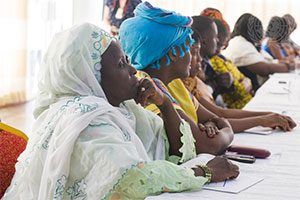 Representatives of Civil Society, Sierra Leone. Credit: UN Photo/Eskinder Debebe
Civil society faces mounting threats worldwide, even as it remains essential for democratic accountability, especially in countries struggling with economic instability and social inequality. However, at the same time, nations with weak democratic governance structures also systemically suppress the power of civil society. Human rights activists across the Global South frequently challenge issues such as political persecution and gender oppression, but in return face state-sanctioned punishment for their advocacy. Imprisonment and exile are common mechanisms of punishment that seek to erode the strength of civil society. The 2026 World Press Freedom Index has reached its lowest level in 25 years, with more than half of the world’s countries now falling into the "difficult" or “very serious” category for press freedom. IPS seeks to highlight the work of civil society across the Global South as well as the challenges that they face.
Updated by Yilan Batista and Shuli Wong August 2026

The Week with IPS

NEXT STOP - SDGs
Tracking global progress towards a sustainable world
Tracking global progress towards a sustainable world
