Languages
Monday, September 21, 2026



News and Views from the Global South
Africa

Q&A: Sustainable Development Key to Reducing Drug Use
"Drugs and crime threaten one of our most important goals - to ensure sustainable development around the world," United Nations Secretary-General Ban Ki-moon stated on Jun. 26, during a General Assembly debate on drugs and crime as a threat to development.Eco-Villages Breathe New Life Into Rural Senegal
Eighty-odd kilometres outside Dakar, the Senegalese capital, solar power and an irrigation scheme are transforming a traditional village into what the government hopes will be a model for the future of the countryside.
Going Dutch Means Staying Stuck
Growing numbers of asylum seekers are being denied refugee status by the Dutch authorities, but cannot go back to their own country either. Forced removals are doing little to better the situation.
Mapping out Climate Change Adaptation Plans on Kenya’s Airwaves
On a Wednesday morning in Mutitu-Andei township in Makueni County, one of Kenya’s driest areas, smallholder farmer Josephine Mutiso tunes into Radio Mang’elete 89.1 FM and listens as meteorological experts discuss the changes in rainfall patterns in the county.
Cameroon’s Baka Evicted from Forests Set Aside for Logging
As Lysette Mendum listens to the sound of bulldozers crashing through the forest clearing a road to a mining site near her small village of Assoumdele in the Ngoyla-Mintom forest block in Cameroon’s East Region, she has never been more fearful in her life.
Success of Remedial Education in DRC
The government of the Democratic Republic of Congo is enjoying success with the remedial education centres set up to give children from underprivileged backgrounds a free education and vocational training.
Treatment of Gays No Better in South Africa
When Junior Mayema boarded a plane to South Africa from his native Democratic Republic of Congo in 2010, he cried tears of joy because he was finally heading to a country where he could live openly as a gay man.
Bringing People “Back to Life” in Uganda’s Slums
As soon as Sanyu Nagia sits down outside Barbara Namirimu’s home, she asks to see her patient’s bag of medicine. It is too heavy for the ill Namirimu to carry, so her mother, Efrance Namakula, brings it out and hands it over.Market Gardens Key to Autonomy for Niger Women
Four figures bend intently over their work in one corner of the large vegetable garden near the western Niger village of Dioga. Months after the village's main harvest has been brought in – and eaten up – the irrigated green of the garden is welcome relief in a part of the country where hunger never seems far away.
The Resurgence of Polio in Nigeria
Twelve-year-old Sunday Oderinde sits by the side of the road with both legs folded under him and watches his friends play a game of soccer on the streets of Iwaya, a suburb in Lagos, Nigeria. It is a game that he would love to join in but cannot.
Liberia Looking for a Sustainable Economic Future at Rio+20
Deep in the forest in Gbarpolu County, northwest Liberia, a group of men working a surface gold mine are asked what will happen to the land when they are finished with it.
Sudanese Refugees Dying of Thirst
Sudanese refugees have started dying as a camp in South Sudan ran out of water four days ago after a massive influx of people fled across the border to escape war and hunger.
Tension Around Possible Islamic State in Northern Mali
Tuareg and Islamist rebel groups which seized control of northern Mali in March are trying to find common ground for the joint administration of the territory. Residents of the region fear that individual and collective freedoms will not be respected if such an alliance sets up an Islamic state.
Agriculture Key to Liberia’s Youth Unemployment Challenge
With his gold chain, baseball cap, and baggy denim shorts, Junior Toe wears the uniform of Liberia’s urban youth. Spend just a few minutes with the young man and it is evident that he possesses the street smarts to match the look.
Water Knows No Border Between Angola and Namibia
A transboundary initiative aimed at providing clean drinking water and proper sanitation between Angola and Namibia is making steady progress.
Rural Zambia’s Drinking Supply Fraught with Danger and Disease
Bupe Bana-Victor has lived in the Mwense district of Luapula Province in northern Zambia all her life. And for her, water talk is synonymous with the Luapula River, which lies just 20 metres from her village and snakes through the entire region before it joins the Lualaba River – a tributary of the mighty Congo, Africa’s second-largest river.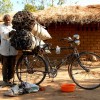
Malawi Turns to Mozambique for Power
On-again, off-again… it's the story of both Malawi's power supply and the interconnection project that could end blackouts with power imported from neighbouring Mozambique.
Child Victims of Côte d’Ivoire’s Crisis Survive Off Trades
Twelve-year-old Ahmed* pauses on his crutches in the narrow lane that leads from his house to the main road, glancing at the bullet holes still visible on the walls here in the Abobo Park 18 area of Abidjan. He sighs, then speeds up again to catch the bus that will take him downtown to the Adjamé quarter.
Sharing Southern Africa’s Water
The Southern African Development Community's protocol on shared watercourses is recognised as one of the world's best. But sound agreements on the sustainable and equitable management of joint water resources require effective means to implement them.
Building a Company in Mozambique – One Peanut at a Time
When you board Mozambique’s national carrier, Linhas Aéreas de Moçambique, you will most likely be given small blue packets of peanuts to munch as the jet whisks you from the country’s capital, Maputo, to as far afield as Europe. Sugar, salt or chilli flavour. Take your pick.
South Africa’s ‘Traditional Courts Bill’ Impairs Rights of 12 Million Rural Women
The Traditional Courts Bill currently under discussion in South Africa’s parliament and due to be enacted by the end of 2012 could undermine the basic rights of some of the country’s most vulnerable inhabitants: the 12 million women living in remote rural communities across the country.« Previous Page — Next Page »


The Week with IPS

NEXT STOP - SDGs
Tracking global progress towards a sustainable world
Tracking global progress towards a sustainable world
