Languages
Wednesday, November 18, 2026



News and Views from the Global South
Editors' Choice

Education Fights Militants and Military
Eight-year-old Muhammad Akram was forced to quit school when he was in the second grade, when the Taliban destroyed the small, government-run school that he and his brother had been attending.
Unemployed Youth Turn to Drugs
The air is heavy with the smell of marijuana as Gibrilla (23) expertly rolls a large joint at the Members of Blood (M.O.B) gang base in a poor neighbourhood of Sierra Leone’s capital, Freetown.
Closing Europe’s Borders Becomes Big Business
The European Union is implementing a new border management system with tougher migration control the core aim. Major security and weapons companies are already reaping the benefits.U.S. to Take Closer Look at Flood of Corporate Political Spending
Civil society actors and the some corporate groups here are reacting with excitement to indications that the U.S. Securities and Exchange Commission (SEC), which regulates the country’s stock exchanges, is likely to take up discussion over new rules that would mandate the public disclosure of all political spending by U.S.-listed public corporations.
Historic Mapuche Land Conflict Flares Up
A string of attacks in the southern Chilean region of Araucanía, where native Mapuche people are struggling for their land rights, puts the spotlight squarely on what analysts call the "supine ignorance" displayed by authorities about the country's history.
Villagers Wail Against Nuclear Power
Mahalakshmi, a housewife married to a farmer, is afraid for her family’s future. The fifty-two-year-old woman is also frustrated that Indian authorities have "betrayed" poor villagers.
Yemeni Women Struggle to Step Forward
Yemeni women have played an integral role in the protests against ex-President Ali Abdullah Saleh’s 33-year regime last year. But despite the country’s upcoming political ‘National Dialogue’ - brokered by Gulf Cooperation Council (GCC) countries and intended to bring together a cross-section of Yemeni constituencies - females still face a wall of discriminatory laws and practices, and a status quo willing to enforce them.
OP-ED: Climate Inaction Is a Clear Failure of Democracy
Around the world, 2012 was the year of extreme weather, when we unequivocally learned that the fossil fuel energy that powers our societies is destroying them. Accepting this reality is the biggest challenge of the brand new year.
Mystical Islam Deters Fundamentalism
Indonesia, the world's most populous Muslim-majority country, has found a deterrent to Islamic fundamentalists: they dress conservatively, sport short beards and Islamic caps and emulate the ways of the Prophet Muhammad.
Bought, Sold and Abused in Yemen
Twenty-one-year-old Aisha clings to her two children as she recounts her tale of horror. Growing up in the Somali capital Mogadishu, she fell in love and bore a child out of wedlock four years ago. When her family threatened her life for destroying her ‘honour’, Aisha escaped.
Reviving Family Farming in Angola, Carrot by Carrot
"We never used to eat carrots, but now we like them," said Rebeca Soba, admiring her vegetable garden, an island of diversity in the midst of a vast sugarcane plantation. Vegetable gardening has been introduced at the Capanda Agroindustrial Pole (PAC) as a source of income for local small farmers.
A Year of Progress in Argentina’s Human Rights Trials
Although it didn’t receive much media coverage, this year Argentina’s justice system made strides in speeding up human rights cases, and dozens of defendants were convicted, three decades after the end of the 1976-1983 dictatorship.
Guyana Hits Paydirt on Low Carbon Development Path
Imagine Guyana and Dominica without forests and rivers, or Antigua, Barbados and St. Lucia without beaches.
Gangs Back Plan for Violence-Free Districts in El Salvador
Salvadoran youth gang leaders have accepted a proposal to declare 10 municipalities free of violence – a bold plan that has run up against the mistrust of vast segments of society with regard to the gangs and their aim of reinsertion in society.
Kenya’s Growing Luxury Housing Market Not for Locals
Despite the development boom in state-of-the-art luxury homes in Kenya, the country’s upper class has fallen on hard times and can no longer afford them, according to economic experts here. Instead, Kenya’s formerly wealthy have now become part of the continent’s growing middle class.
Africa Cashes in on Mineral Wealth
Many of the fastest-growing countries in the world are in Africa, the poorest continent on the planet, but the potential for recently-discovered resources to generate broad-based inclusive development opportunities is massive and remains under-exploited.

Salvaging Waste Food for the Hungry in Spain
A recurring question in crisis-stricken Spain is how to ensure that surplus agricultural products reach those most in need. One response is citizen initiatives to protest the waste of food and to advocate efficient management along the full length of the food chain.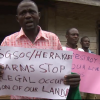
Q&A: Fighting to Save Africa’s Richest Rainforest
Protests against a controversial palm oil plantation in the Korup National Park, Africa’s oldest and richest rainforest in terms of floral and faunal diversity, in Mundemba, southwest Cameroon will continue despite the arrests and intimidation of local environmental campaigners.

Obama’s Victory a Boon for Clean Air, Water Acts
With Barack Obama’s re-election last month as U.S. president, key environmental protections escaped a likely Republican chopping block, and new regulations are expected when his second term begins in January.
Endangered Bird Falls Prey to Royal Hunting Games
Every year, between November and January, the Indus Flyway bears witness to a migration of an endangered bird species – the houbara bustard – from Central Asia to the deserts of Pakistan.
Curbing Tanzania’s “Land Grabbing Race”
From January 2013, Tanzania will start restricting the size of land that single large-scale foreign and local investors can “lease” for agricultural use. The decision follows both local and international criticism that major investors are grabbing large chunks of land here, often displacing small-scale farmers and local communities.« Previous Page — Next Page »


The Week with IPS

NEXT STOP - SDGs
Tracking global progress towards a sustainable world
Tracking global progress towards a sustainable world
