
Monday, November 9, 2026



News and Views from the Global South
Gender

What Selfies Have in Common with the SDGs
"My cousin was a very successful and distinguished student. She said that she finished high school with excellent grades and enrolled in college, but a month later, her parents forced her to leave school and burned all her books and studying material. So, the girl set fire to herself."
Pakistani Rights Advocates Fight Losing Battle to End Child Marriages
At first glance, there is nothing very unusual about Muhammad Asif Umrani. A resident of Rojhan city located in Pakistan’s eastern Punjab province, he is expectantly awaiting the birth of his first child, barely a year after his wedding day.
U.N.’s New Development Goals Must Also Be Measurable for Rich
The United Nations is on the verge of releasing a new set of Sustainable Development Goals (SDGs) - perhaps 17 or more - to replace the eight Millennium Development Goals (MDGs) which will run out by the end of 2015.
OPINION: Why Asia-Europe Relations Matter in the 21st Century
Hopes are high that the 10th Asia-Europe Meeting – or ASEM summit – to be held in Milan on October 16-17 will confirm the credibility and relevance of Asia-Europe relations in the 21st century.
Time to “Drop the Knife” for FMG in The Gambia
Women’s rights activists in the Gambia are insisting that more than 30 years of campaigning to raise awareness should be sufficient to move the government to outlaw female genital mutilation (FMG).
Future of Rwanda’s Orphans Still Uncertain
Every day, 14-year-old Deborah wakes up in an orphanage, goes to school, and comes home to an orphanage. It does not matter when or for how long she leaves the orphanage, she always knows she’ll be back.
Pakistan: Where Mothers Are Also Children
If 22-year-old Rashda Naureen could go back six years in time, she would never have agreed to get married at the tender age of 16.
Reproductive Rights to Take Centre Stage at U.N. Special Session
As the United Nations continues negotiations on a new set of Sustainable Development Goals (SDGs) for its post-2015 development agenda, population experts are hoping reproductive health will be given significant recognition in the final line-up of the goals later this year.
Young Latin Americans Face Spiral of Unemployment, Poverty
In Latin America, young people are the main link in the chain of poverty leading from one generation to the next. Civil society groups, academics and young people themselves say it is imperative to strengthen the connection between education today and decent employment tomorrow.
OPINION: Unleashing African Young People’s Potential
An African proverb says “a child that we refuse to build today will end up selling the house that we may build tomorrow.”
Shea Harvesting Good for Income, Bad for the Environment in Ghana
The shea tree, a traditional African food plant, represents a major source of income for women in Ghana's Northern, Upper West and Upper East regions, but they are helping to destroy the very resource that gives them money by cutting it down to produce charcoal.
Putting Population Management in Pacific Women’s Hands
Populations of many Melanesian countries in the southwest Pacific Islands region are expected to double in a generation, threatening regional and national efforts to improve low economic and human development indicators.
Zimbabwean Girls Venture into Technological Innovation
For 22-year-old Moselyn Muchena, a final year computer science student at the University of Zimbabwe, it seemed obvious to create a mobile application offering easy access to services in the local catering industry, largely because of the huge number of female entrepreneurs in that sector.
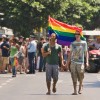
U.S. Groups Reject Anti-Gay Discrimination Bill over Religious Exemption
Civil rights groups across the United States have withdrawn their support from a major legislative proposal that would outlaw workplace discrimination against sexual minorities, warning that recent legal developments could exempt companies on religious grounds.
OPINION: Obama’s Quick Fix Won’t Solve the Regional Refugee Crisis
In recent months, an unprecedented surge of refugee women and children has been traveling alone to the United States to seek protection at our southern border.
In Bangladesh, a Steady Pursuit of Freedom
Visiting Bangladesh has been a lifelong dream of mine, but all that I had heard about a people who love freedom so much that they have withstood great armies, famine and intractable poverty could not prepare me for what I’ve seen in the last three days.
Conservatives and Nationalists At Centre Stage in Poland
A mix of conservative Catholicism and nationalism has become the predominant view in Polish public debate, with some worrying effects.
Single Mothers Battle on in Former War Zone
The village of Valipunam, 322 km north of Sri Lanka’s capital Colombo, occupies one of the remotest corners of the country’s former war zone. The dirt roads are impossible to navigate, there are no street lights, telephone connections are patchy and the nearest police post is miles away, closer to the centre of the battle-scarred Mullaitivu district.
Burundian Women Want a Greater Say in Running of Country
As Burundi heads towards the 2015 general elections, and despite a quota of 30 percent women’s representation in parliament, women in this southeast African nation feel that they are yet to have a significant say in the management of their country.
Lack of Toilets Keeps Women Out of Politics
Nine months after she was elected head of her village council, 36-year-old Krupa Shanti has overseen some significant changes in this rural outpost of Mallampeta, 570 km away from Hyderabad, capital of the southeastern Indian state of Andhra Pradesh.
Rights Experts Urge Action on Gender Equality in Taiwan
Prominent international human rights experts are calling on the Taiwan government to quickly enact a comprehensive anti-discrimination act, revamp the law on citizenship and take a wide range of other actions to curb gender discrimination.« Previous Page — Next Page »





Women make up half the world's population, but don't nearly share half of the world's wealth, well-being and opportunity. Two-thirds of the world poor are women, disproportionally exposing women to precarious living conditions, disease and unmitigated natural disasters. The media, meanwhile, remains a male-dominated sector in much of the world, contributing to women's voices lacking a crucial amplifier to put their concerns on political agendas and unleash the development potential of their ingenuity. Rather than then stereotypical victims of local and global forces, women are also organizer, innovators, conservators and community builders. These are some of their stories.

The Week with IPS

Tracking global progress towards a sustainable world
