Languages
Monday, October 26, 2026



News and Views from the Global South
Population

Bangladeshi Girls Seek Equal Opportunity
Until five years ago, Shima Aktar, a student in Gajaghanta village in the Rangpur district of Bangladesh, about 370 km northwest of the capital Dhaka, was leading a normal life. But when her father decided that it was time for her to conform to purdah, a religious practice of female seclusion, things changed.
When Land Restoration Works Hand in Hand with Poverty Eradication
Tugging at the root of a thorny shrub known as ‘juliflora’, which now dots the village of Chirmiyala in the Medak District of southern India’s Telangana state, a 28-year-old farmer named Ailamma Arutta tells IPS, “This is a curse that destroyed my land.”
Innovation Offers Hope in Sri Lanka’s Poverty-Stricken North
In this dust bowl of a village deep inside Sri Lanka’s former conflict zone, locals will sometimes ask visitors to rub their palms on the ground and watch their skin immediately take on a dark bronze hue, proof of the fertility of the soil.
Migrants Deported from the U.S. in Limbo on the Mexican Border
The areas under the low bridges over a section of the canalised channel of the Tijuana River that runs along the border between Mexico and the United States have become enormous open-air toilets.
Women’s Football Struggles for Equal Rights In Uganda
Growing up with five brothers, soccer-mad Majidah Nantanda had half a team to compete against at home in Makindye, a suburb in Uganda’s capital, Kampala. But at her school, in the 1990s, there were two sports rules: “Netball for the girls and football for the boys,” recalls the 32-year-old, as she stands on the sidelines of a boy’s game in Makindye.
OPINION: International Relations, the U.N. and Inter Press Service
In 1979, I had a debate at the United Nations with the late Stan Swinton, then the very powerful and brilliant director of Associated Press (AP). At one point, I furnished the following figures (which had been slow to change), as an example of Western bias in the media:
War Veterans Planting for Peace in South Sudan
Along the fertile banks of sub-Saharan Africa’s White Nile, one of the two main tributaries of the Nile River, a war veteran’s co-op is planting for a food secure future in South Sudan, a country potentially facing famine.
No Hope for AIDS-Free Generation in Uganda as Controversial HIV Bill is Signed into Law
HIV/AIDS activists are adamant Uganda will not achieve an “AIDS-free generation” now a “backwards” HIV/AIDS Bill criminalising the “wilful and intentional” transmission of the disease has been signed into law.
Zambia’s Cash Transfer Schemes Cushion Needy Against Climate Shocks
“Last season, I lost an entire hectare of groundnuts because of a prolonged drought. Groundnuts are my hope for income,” says Josephine Chaaba, 60, from Pemba district in southern Zambia.
Caregiving Exacerbates the Burden for Women in Cuba
Hortensia Ramírez feels like she needs more hands to care for her 78-year-old mother, who suffers from arteriosclerosis, do the housework, and make homemade baked goods which she sells to support her family.
In Saving a Forest, Kenyans Find a Better Quality of Life
When Mercy Ngaruiya first settled in Kasigau in south eastern Kenya a decade ago, she found a depleted forest that was the result of years of tree felling and bush clearing.
India: Home to One in Three Child Brides
Basanti Rani*, a 33-year-old farmers’ wife from the northern Indian state of Haryana, recently withdrew her 15-year-old daughter Paru from school in order to marry her off to a 40-year-old man.
A Life Reserve for Sustainable Development in Chile’s Patagonia
The people of Patagonia in southern Chile are working to make the Aysén region a “life reserve”. Neighbouring Argentina, across the border, is a historic ally in this remote wilderness area which is struggling to achieve sustainable development and boost growth by making use of its natural assets.
Can Land Rights and Education Save an Ancient Indian Tribe?
Scattered across 31 remote hilltop villages on a mountain range that towers 1,500 to 4,000 feet above sea level, in the Malkangiri district of India’s eastern Odisha state, the Upper Bonda people are considered one of this country’s most ancient tribes, having barely altered their lifestyle in over a thousand years.
Recurrent Cholera Outbreak in Far North Cameroon Highlights Development Gaps
Under a scorching sun, with temperatures soaring to over 40 degrees Celsius, Lara Adama’s family is forced to dig for water from a dried-out river bed in Dumai, in northern Cameroon.
Mexico’s Orphanages – Black Holes for Children
Homes for orphans or children in vulnerable situations in Mexico lack the necessary state regulation and supervision, which leads to scandalous human rights violations.TB Epidemic Threat Hangs Over Ukraine Conflict
Doctors are warning of a worsening tuberculosis epidemic in Eastern Ukraine as the continuing conflict there begins to take a heavy toll on public health.
Brazil’s “Dalai Lama of the Rainforest” Faces Death Threats
Davi Kopenawa, the leader of the Yanomami people in Brazil’s Amazon rainforest, who is internationally renowned for his struggle against encroachment on indigenous land by landowners and illegal miners, is now fighting a new battle - this time against death threats received by him and his family.
One Woman’s Struggle to Find the Right Contraceptive
Beatrice Njeri had just come home from her job as a janitor at a primary school in Nairobi. It was August 2009.
The Weakest Link of HIV Prevention in Africa – Contraception
In the rush to save babies from HIV infection and treat their mothers, experts warn that a key element of HIV prevention is being neglected in Africa – contraceptives for HIV positive women.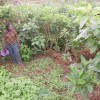
Adaptation Gaps Mean African Farmers Fork Out More Money for Reduced Harvests
In Cameroon's Northwest Region, Judith Muma walks 9km from her home to her 300-square-metre farm. The vegetables she grows here are flourishing thanks to the money she has borrowed from her njangi (thrift group) and a local credit union to finance a small artisanal irrigation scheme.« Previous Page — Next Page »





 One Thousand Internally Displaced Persons (IDPs) Relocated from Tomping Camp in South Sudan. Credit: UN Photo/Isaac Billy
It took hundreds of thousands of years for the world’s human population to cross one billion in 1804. Approximately 200 years later, the population has multiplied sevenfold. In 2023, the global population crossed 8 billion, and is expected to reach 9 billion before 2050. With the planet more crowded than ever, it is essential to keep track of population trends, urbanization, migration, and reproduction across the world.
Life expectancy has seen significant strides in the past century, largely due to economic development and increased standards of living. On the contrary, trends in global fertility are shifting, with certain regions in Africa and Asia reporting higher rates, while parts of Europe and North America report stagnant or lower rates. This is in part due to differences in sexual and reproductive healthcare, as well as societal and economic conditions around the world. For example, child marriage is prevalent in certain societies, where childbearing is also considered a familial duty. Meanwhile, stagnating economies frequently experience lower marriage and childbearing rates.
The increase in migration and urban development around the world is also linked to global population trends. By 2050, it is expected that approximately 66 percent of all people will live in cities. Furthermore, global crises such as warfare and natural disasters also prompt transnational migration. Transnational migration is linked to a variety of socioeconomic issues in both host and receiving countries: migrants often leave developing countries with less access to educational and economic opportunities and arrive in developed countries where they are frequently the targets of ethnic, racial, and cultural discrimination, and economic exploitation. Recent crises in Europe and the United States demonstrate the importance of advocating for migrants worldwide. As migrants from the Global South are increasingly stripped of their legal and civic rights in unlawful deportations, or targeted in acts of identity-based violence, it is essential to keep track of population trends and protect the human rights of migrant populations. Climate-related disasters are now a major driver of displacement, with nearly half of all new internal displacements in 2025 being disaster-related.
IPS is devoted to covering issues surrounding population trends, migration, and reproduction through its compelling articles, which use both statistics and human stories to provide readers with robust and informative viewpoints.

The Week with IPS

NEXT STOP - SDGs
Tracking global progress towards a sustainable world
Tracking global progress towards a sustainable world
