Languages
Thursday, November 12, 2026



News and Views from the Global South
Editors' Choice
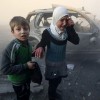
Syria’s “Barrel Bombs” Cause Human Devastation, Says Rights Group
The warring parties in the brutal four-year-old military conflict in Syria, which has claimed the lives of over 200,000 civilians and triggered “the greatest refugee crisis in modern times,” continue to break every single pledge held out to the United Nations.
Tackling Corruption at its Root in Papua New Guinea
Corruption, the single largest obstacle to socioeconomic development worldwide, has had a grave impact on the southwest Pacific Island nation of Papua New Guinea. While mineral resource wealth drove high gross domestic product (GDP) growth of eight percent in 2012, the country is today ranked 157th out of 187 countries in terms of human development.
Can Nepal’s TRC Finally Bring Closure to its War Survivors?
The picture of Muktinath Adhikari, principal of Pandini Sanskrit Secondary School in the Lamjung district of west Nepal who was killed during the country’s decade-long civil conflict, became an iconic portrayal of the brutality of the bloody ‘People's War’.
Indigenous Food Systems Should Be on the Development Menu
Overcoming hunger and malnutrition in the 21st century no longer means simply increasing the quantity of available food but also the quality.
The Hidden Billions Behind Economic Inequality in Africa
Reports this year of illicit moneys from African countries stashed in a Swiss bank – indicating that corruption lies behind much of the income inequality that affects the continent – have grabbed international news headlines.
Biogas Eases Women’s Household Burden in Rural Cuba
On the blue flame of her biogas stove, it takes half as long for rural doctor Arianna Toledo to heat bath water and cook dinner as it did four years ago, when she still used electric power or firewood.
Threats, Deaths, Impunity – No Hope for Free Press in Pakistan
It is no surprise that most Pakistani journalists work under tremendous stress; caught between crime lords in its biggest cities, militant groups across its tribal belt and rival political parties throughout the country, censorship, intimidation and death seem almost to come with the territory.
Negev Bedouin Resist Israeli Demolitions “To Show We Exist”
Lehavim Junction in the northern Negev in Israel has been the backdrop to protests against home demolitions in Bedouin localities for the past four and half years.
LGBTI Community in Central America Fights Stigma and Abuse
Despite the aggression and abuse she has suffered at the University of El Salvador because she is a trans woman, Daniela Alfaro is determined to graduate with a degree in health education.
The Two Koreas: Between Economic Success and Nuclear Threat
The two Koreas are an odd match – both are talking about possible dialogue but both have different ideas of the conditions, and that difference comes from the 62-year-old division following the 1950-53 Korean War.
Deadly Asbestos Still Costing Lives
“I would get asbestos in my mouth, spit it out and carry on working,” said 52-year-old Francisco Padilla. Exposure to this deadly mineral fibre over most of his working life has resulted in cancer and the removal of his left lung, the lung lining and part of his diaphragm.
Indigenous Peoples – Architects of the Post-2015 Development Agenda
“We do not inherit the Earth from our ancestors, we borrow it from our children” – an ancient Indian saying that encapsulates the essence of sustainability as seen by the world’s indigenous people.
Maimed by Conflict, Forgotten by Peace: Life Through the Eyes of the War-Disabled
It is a hot, steamy day in Sri Lanka’s northwestern Mannar District. Mid-day temperatures are reaching 34 degrees Celsius, and the tarred road is practically melting under the sun.
OPINION: Developing Economies Increasingly Vulnerable in Unstable Global Financial System
After a series of crises with severe economic and social consequences in the 1990s and early 2000s, emerging and developing economies have become even more closely integrated into what is widely recognised as an inherently unstable international financial system.
Israeli Arrest Campaign Targets Palestinian Children
Fourteen-year-old Malak al Khatib, one of the youngest Palestinian detainees and one of only a handful of girls, was released from an Israeli prison on Feb. 13 into the arms of emotional family members and supporters after being incarcerated in an Israeli prison for two months on “security offences”.
Millennium Development Goals: A Mixed Report Card for India
Despite being one of the world's fastest expanding economies, projected to clock seven-percent GDP growth in 2017, India – a nation of 1.2 billion – is trailing behind on many vital social development indices while also hosting one-fourth of the world's poor.
Latin American Migrants Suffer Prejudice in Their Own Region
In the movie “A Day Without a Mexican“, the mysterious disappearance of all Mexicans brings the state of California to a halt. Would the same thing happen in some Latin American countries if immigrants from neighbouring countries, who suffer the same kind of discrimination, went missing?
Cancer Locks a Deadly Grip on Africa, Yet It’s Barely Noticed
Hidden by the struggles to defeat Ebola, malaria and drug-resistant tuberculosis, a silent killer has been moving across the African continent, superseding infections of HIV and AIDS.
Money Pipeline Flowing Between U.S. Congress and Big Oil
With battle lines sharpening over the stalled Keystone XL pipeline, a new analysis details the intense industry lobbying of both houses of the U.S. Congress since 2013 – to the tune of 58.8 million dollars by five refinery companies alone.
Cuban Agriculture Needs Better Roads
When it rains, trucks get stuck in the mud on the poor roads in this rural municipality in eastern Cuba. The local population needs more and better roads to improve their lives and help give a much-needed boost to the country’s farming industry.
U.N. Touts 2015 as Milestone Year for World Body
The United Nations, in a sustained political hype, is touting 2015 as a likely breakthrough year for several key issues on its agenda - primarily development financing, climate change, sustainable development, disaster risk-reduction and nuclear non-proliferation.« Previous Page — Next Page »


The Week with IPS

NEXT STOP - SDGs
Tracking global progress towards a sustainable world
Tracking global progress towards a sustainable world
